
Last updated November 2, 2026
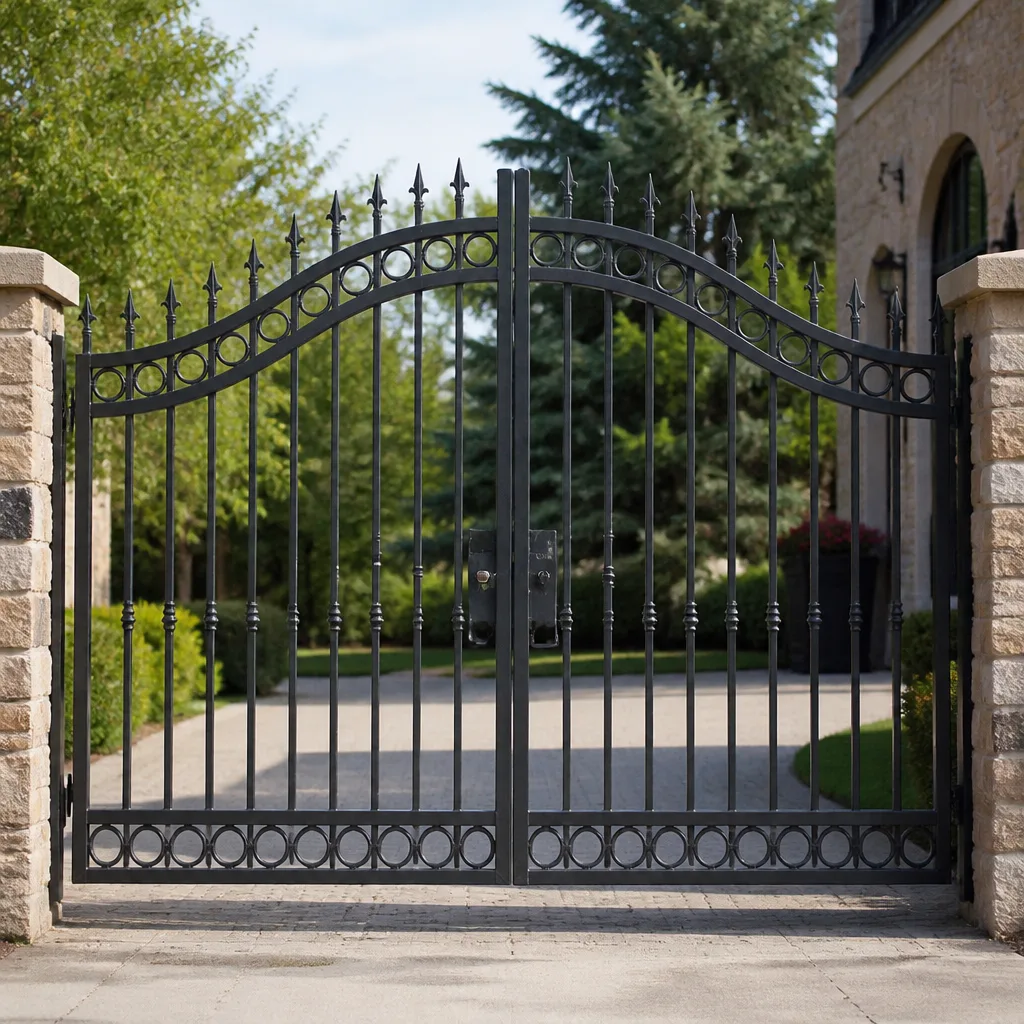 Wrought iron
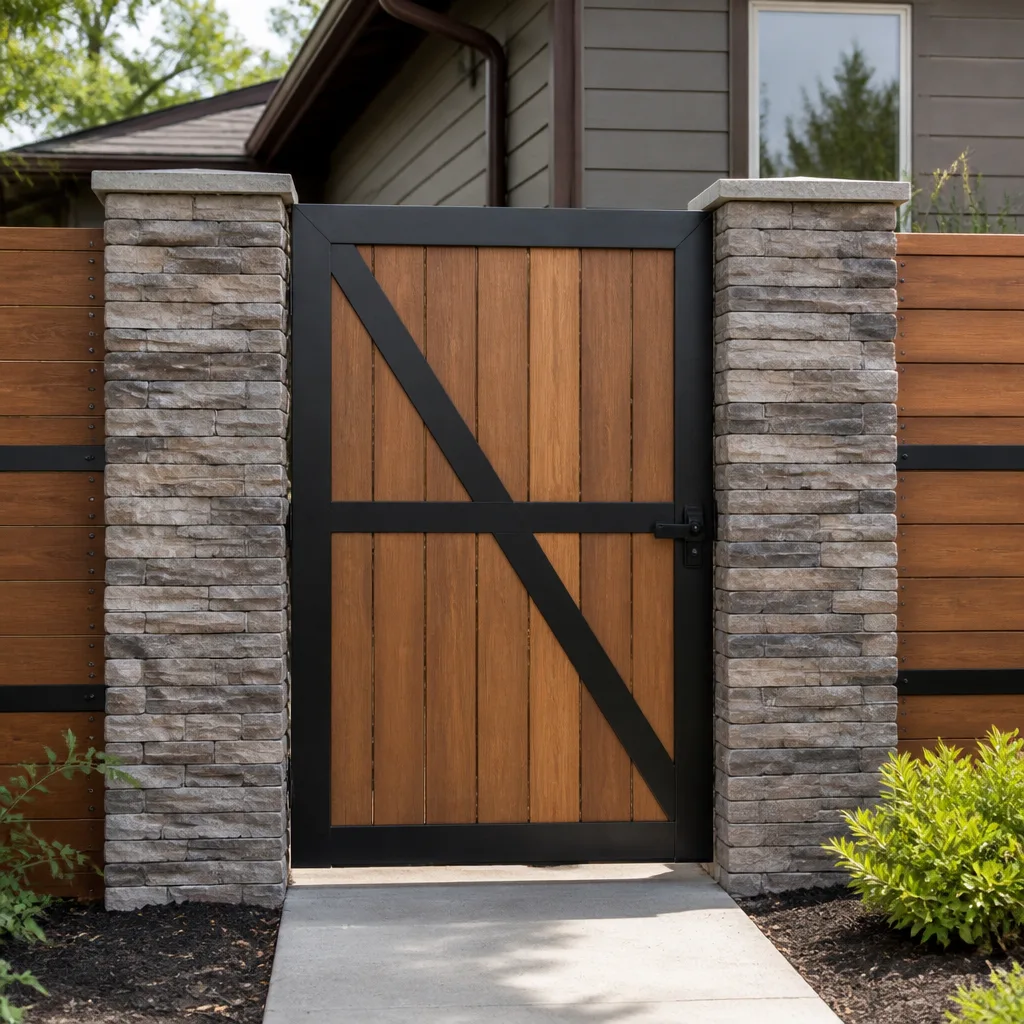 Wood & steel frame
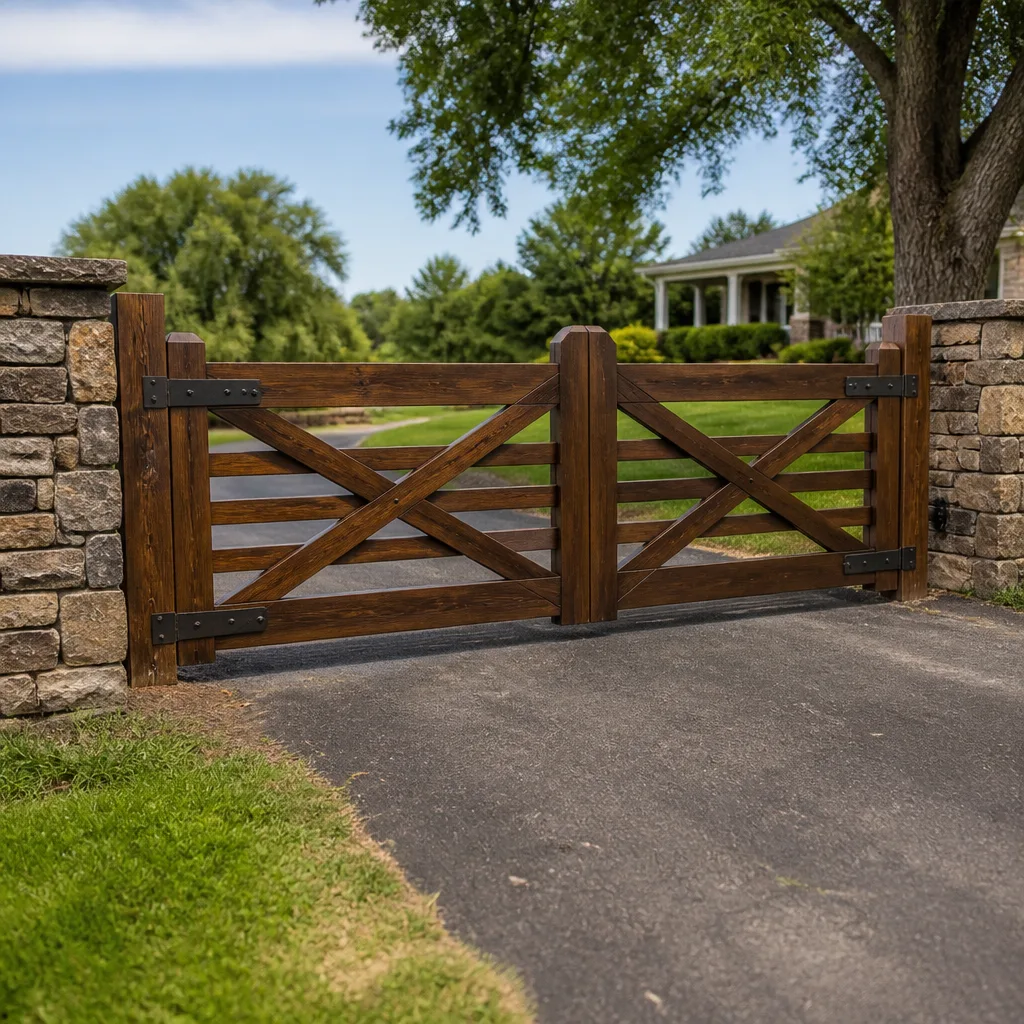 Farm & ranch
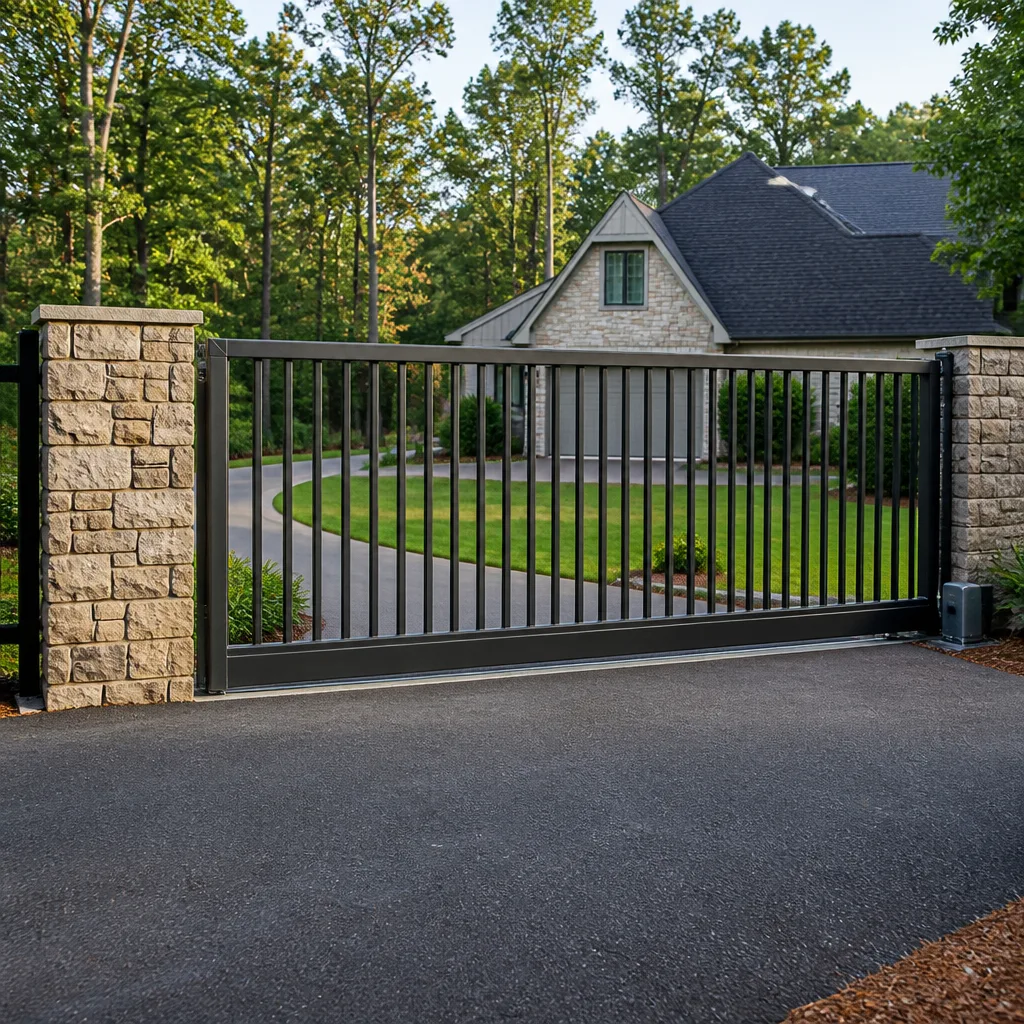 Sliding driveway gates
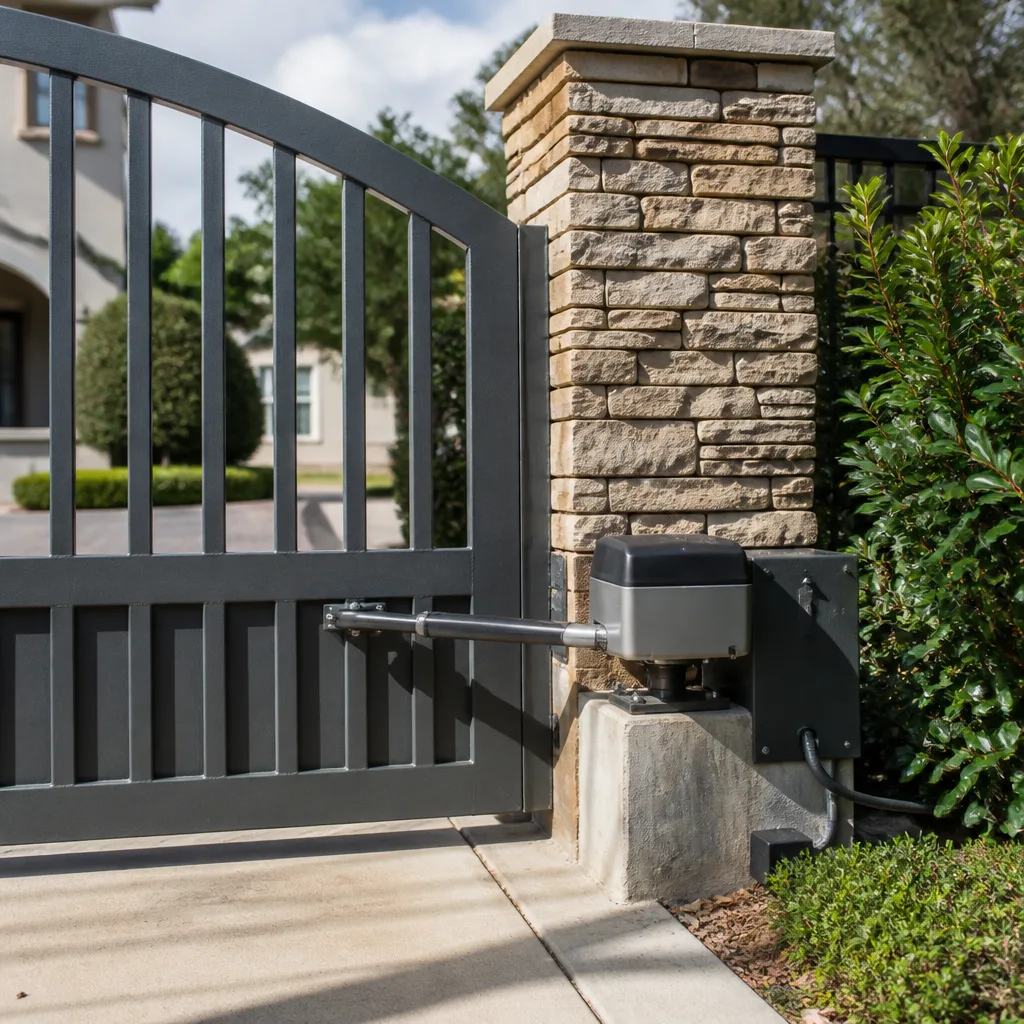 LiftMaster operators
Free on-site gate assessment - hinges, posts, and your LiftMaster or Nice gate operator checked before anything is quoted
The assessment is free and the quote is the invoice.
Get your free estimateChoosing the Right Gate Repair Brand: A Buyer’s Guide for Citrus Heights
Most gate brand guides read like marketing brochures: horsepower specs, gear ratios, remote range. None of that tells you what actually happens when the circuit board fails on a Tuesday morning and you’re late for work. What matters in Citrus Heights is whether a technician can get the part that afternoon, not whether the brand won a design award. We see the same story every month: someone buys a gate operator based on Amazon reviews, then discovers the proprietary control board isn’t stocked anywhere within 100 miles. That’s the problem with choosing a gate brand the way you’d choose a coffee maker. This guide evaluates brands by the only metric that matters two years after purchase: what happens when it needs service. Here’s what we’ll cover: how brand choice shapes repair costs, which brands have reliable parts availability in the greater Sacramento market, when a commercial-grade operator makes sense for a residential driveway, and the failure patterns we actually see in Citrus Heights.
Styles & brands we work with
- Wrought iron
- Wood & steel frame
- Farm & ranch
- Sliding driveway gates
- LiftMaster operators
Quick Answer
The best gate repair brand in Citrus Heights is one whose components are stocked by local distributors and whose design uses standard parts rather than proprietary ones. Brands like LiftMaster and Linear offer the most predictable parts availability and repair economics across the Sacramento region. If you’re buying with the repair timeline in mind, choose the brand a specialist can fix the same week, not the one with the highest review count online.
Table of Contents
- Parts Availability: The Metric Nobody Checks Before Buying
- Proprietary vs. Open-Architecture Operators: What It Costs You
- Residential-Grade vs. Commercial-Grade: When the Upgrade Makes Sense
- What We See Fail Most Often in Citrus Heights
- Warranty Terms in Context: What’s Actually Covered
- How to Evaluate Any Gate Brand Before You Buy
- What Citrus Heights Climate Means for Gate Hardware
- Common Mistakes to Avoid
- When to Call a Professional
- Frequently Asked Questions
- The Bottom Line
Parts Availability: The Metric Nobody Checks Before Buying
Parts availability is the single most important factor in gate brand selection, and it’s the one almost no homeowner considers. A gate operator isn’t a finished product like a water heater or a dishwasher. It’s a system with a service life measured in years, and during those years it will need consumable parts: control boards, limit switches, gear assemblies, capacitors, transformers. When those parts fail, your repair timeline is determined entirely by supply chain geography.
Here’s what that means in practical terms for Citrus Heights homeowners. The Sacramento area has several established gate parts distributors. Brands with local distributor support can usually produce a control board same-day or next-day. Brands without local support require the part to be drop-shipped from a regional or national warehouse, which adds three to eight days to any repair.
Here’s how the major brands break down in our local market:
- LiftMaster: Strongest local parts network in the Sacramento region. Their control boards, remotes, and accessories are stocked by multiple distributors, which keeps repair lead times short and prices competitive. This is a significant factor if you have an electric gate repair on a deadline.
- Linear: Very solid parts availability. Linear’s OSCO line of swing and slide gate operators is widely used in commercial settings, and their boards and accessories are carried by local supply houses.
- FAAC: Excellent engineering and very common in high-end residential work. Their proprietary hydraulics mean failures are rarer, but when they do occur, parts are generally available through specialty distributors that serve the Sacramento metro.
- BFT: Strong brand with growing local support in Northern California. Their residential and light-commercial operators are becoming more common, and area distributors have expanded stock in recent years.
Here’s the test we recommend every buyer run before choosing a brand. Call a local gate specialist, name the brand and model you’re considering, and ask one simple question: if the control board fails, how long until you can replace it? The answer tells you everything you need to know about what ownership looks like after year one.
Proprietary vs. Open-Architecture Operators: What It Costs You
The second most important brand differentiator is whether the operator uses proprietary or open-architecture components. This one decision shapes your lifetime repair costs more than any other factor, including build quality. And most buyers have no idea the distinction exists.
A proprietary operator is designed so that its components only work inside that brand’s ecosystem. The control board talks only to the brand’s remotes, the brand’s keypads, the brand’s loop detectors. When the board fails, you buy that exact board from that exact brand, at that brand’s price, on that brand’s supply chain timeline. The gate still gets fixed. But you pay the premium.
An open-architecture operator uses standard components that are interchangeable across brands and systems. Limit switches are generic. Remotes follow industry-standard protocols. Control boards accept inputs from any compatible device. When repairs are needed, the technician can often use a cost-effective replacement part from a different manufacturer, or choose from multiple suppliers for the same component.
Here’s what that difference looks like in dollar terms. A proprietary control board replacement typically runs $250 to $500 for the part alone, and if the local distributor doesn’t stock it, add a week of lead time. An open-architecture replacement board often costs 30 to 40 percent less and is stocked by multiple distributors, meaning same-day or next-day repair becomes realistic.
LiftMaster and Linear have built reputations on open-architecture designs with wide third-party compatibility. FAAC and BFT, by contrast, lean proprietary in their engineering approach. That’s not a criticism: their proprietary components are well-built and their failure rates are low. But when a failure does occur, the repair economics are what they are. This matters for anyone evaluating gate repair in Citrus Heights with an eye on long-term costs.
If you’re buying a gate system soon and want predictable repair costs three years from now, ask whether the operator uses standard, non-proprietary components. That one question will tell you more about your future repair bills than any horsepower rating.
Residential-Grade vs. Commercial-Grade: When the Upgrade Makes Sense
Residential operators are built for a duty cycle: roughly 10 to 15 open-and-close cycles per day. Commercial operators are engineered for 50 to 100 cycles daily, with heavier construction throughout. For most Citrus Heights single-family homes, a residential-grade operator is correct. But there’s a specific scenario where the upgrade makes financial sense, and it has nothing to do with wanting a more expensive gate.
Here’s the rule: if your gate serves multiple residences, or if it’s a shared driveway, or if it’s a rental property with frequent traffic, you’re probably exceeding the duty cycle of a residential unit. The unit doesn’t fail spectacularly when this happens. It wears prematurely. Limit switches drift. Gears strip. Motors overheat. The operator fails at year five or six instead of year ten or twelve, and you eat the replacement cost.
Here’s how to think about it in numbers:
- Count your actual cycles. One car entering and one leaving equals two cycles. If you have three cars in the household, that’s already eight to ten cycles per day on a normal weekday.
- Compare to the residential duty rating. Most residential operators are rated for 10 to 15 cycles daily. A household at the high end of residential traffic is running near the ceiling every single day.
- Factor in the commercial-grade upgrade cost. Moving from residential-grade to a light-commercial operator typically adds $500 to $1,200 to the installed price, depending on brand and features.
- Divide that cost by extended service life. If the commercial unit lasts five years longer, the upgrade costs you about $100 to $240 per year. That’s often less than the cost of one extra service call on a prematurely worn residential unit.
Brands like FAAC and BFT are well established in high-cycle environments, and their light-commercial lines are a natural choice for Citrus Heights properties with shared driveways, large households, or rental units. For lower-cycle single-family homes, a solid LiftMaster or Linear residential operator will reliably hit its service life. We see this recommendation play out regularly with gate installation in Citrus Heights customers deciding between the two tiers.
What We See Fail Most Often in Citrus Heights
Brand marketing materials never include failure data. That’s why this section exists. Here’s what the repair side of the counter actually sees across the Citrus Heights area, based on the service calls that come through our shop week after week.
Let’s be clear about what “failure” means in gate repair. The most common repair is not a broken motor. Gate operators are surprisingly robust. What fails are the components that take the daily strain: limit switches, gear assemblies, capacitor banks, control relays, and the occasional circuit board. These are wear items, and every brand has weak points in specific areas.
Here are the patterns we observe consistently:
- LiftMaster: Frequent failure point is the limit switch assembly, particularly on gate models that see high daily cycle counts. Replacement parts are readily available, which is why repair tends to move fast. Boards are solid on the residential LA400 and LA412 lines.
- Linear/OSCO: We see gear assembly wear on swing operators after several years of continuous service, and occasional capacitor failures. Parts availability keeps repair economics reasonable.
- FAAC: Very reliable hydraulics. When they do need service, problems concentrate in the solenoid valves and hydraulic seals on older units. Repairs are specialized, so labor and parts run higher, but the intervals between repairs are longer.
- BFT: Control board failures appear at a slightly higher rate on specific model lines than average, but their distributor support has strengthened in Northern California, so replacements are less painful than they once were.
What’s the takeaway? No brand is failure-proof. The practical question is whether a failure means three days of downtime or three weeks. In Citrus Heights, a gate specialist with a strong local parts network can turn most operator repairs around same-day or next-day for the brands with established distribution. That’s the deciding factor more often than any engineering spec.
Warranty Terms in Context: What’s Actually Covered
Gate operator warranties sound impressive in marketing copy. Five-year limited warranty. Two-year parts coverage. Lifetime gear train. None of these programs covers the things that actually break, and none of them replace your gate when it’s down for a week waiting on a warranty part. Here’s the context nobody puts in the brochure.
Let’s decode what a typical gate operator warranty actually means for a Citrus Heights homeowner.
Most residential gate operators carry a two-year parts warranty and a one-year labor allowance, though this varies by brand and model line. The important detail is in the “limited” language, which excludes the failures that matter most:
- Wear items are usually excluded. Limit switches, gears, belts, chain drives, and battery backup units typically carry shorter coverage windows or none at all. These are precisely the items that fail first.
- Labor is capped or not included after year one. You may get a free control board under warranty in year two, but the technician’s time to install it is your cost.
- Improper installation voids coverage. This is the silent killer. If the gate was installed by a handyman who didn’t set the travel limits correctly, the warranty is void before the operator ever fails. We see this regularly.
- Acts of nature are excluded. Lightning strikes, power surges, water intrusion from heavy Sacramento winter storms: none of it is covered. And these are common causes of board failure in our climate.
Here’s what warranty coverage actually helps with: a genuine manufacturing defect that appears in the first year or two. That’s rare. Here’s what keeps your gate running: having a gate specialist who can access parts quickly and do the work correctly. In the real world, that’s worth more than any warranty document. A strong warranty is nice. A strong parts network is reliable.
How to Evaluate Any Gate Brand Before You Buy
If you’re replacing an existing gate operator or choosing one for a new gate installation, here’s the evaluation framework that actually predicts whether you’ll be happy with the brand two years from now.
Run through these six questions in order, and you’ll make a better decision than 95 percent of gate buyers.
- Who stocks parts for this brand within 50 miles of Citrus Heights? Call a local gate shop and ask. If no one stocks the brand locally, every future repair carries a built-in delay.
- Does the operator use proprietary or standard components? Standard components mean faster repairs and lower parts costs. Proprietary systems can be excellent, but understand you’re locked into their ecosystem for the service life of the unit.
- What’s the duty cycle, and does it match your household’s actual usage? Count your real cycles. If you’re near the residential ceiling, step up to a light-commercial unit.
- How many service companies in the area work on this brand? A brand with one certified specialist in the region means scheduling headaches when that specialist is booked. A brand that three or four shops service means competitive pricing.
- What’s the real-world failure pattern for this model? Ask the technician who will service it. Not the sales rep who sold it. The technician knows what breaks.
- Does the warranty cover the components that actually fail on this model? If the warranty excludes limit switches and boards, and that’s what fails, the warranty is mostly marketing.
Run those six questions against any brand, and you’ll end up with a gate system that’s serviceable, maintainable, and realistically affordable over its full lifespan. That’s the entire goal of this guide: making sure the decision you make today doesn’t become a frustrating invoice two years from now.
What Citrus Heights Climate Means for Gate Hardware
Gate operators live outdoors year-round, and Citrus Heights gives them a full workout: summer temperatures that routinely pass 100 degrees, winter rain that tests every seal, and Sacramento Valley dust that finds its way into everything. Brand choice matters here in ways that don’t show up on a spec sheet.
Here’s what our climate does to gate hardware, and which brand characteristics mitigate it.
First, summer heat. Operator enclosures trap heat, and electronics don’t like sustained temperatures above 130 degrees inside the housing. That’s a real risk when outdoor temps hit triple digits for weeks straight. Brands that use aluminum housings and include adequate ventilation perform measurably better in the Sacramento summer than brands with plastic enclosures. LiftMaster and FAAC both design for residential heat exposure, which shows up in their longevity data in our region.
Second, winter moisture. Citrus Heights doesn’t get heavy rainfall by some standards, but the wet season brings enough sustained moisture to find any gap in an enclosure seal. Corrosion on terminal blocks and circuit board connections is a leading cause of intermittent electrical failures we fix during the winter months. Sealed enclosures and corrosion-resistant connectors, standard on FAAC and BFT units, make a meaningful difference.
Third, dust. The Sacramento Valley has dry, dusty air for much of the year, and gate operators sit at ground level where dust is thickest. Dust accelerates limit switch wear and causes sensors to lose alignment. Well-sealed gear housings and shielded sensors handle this environment better, which is one reason we recommend commercial-grade units for high-dust properties.
None of this appears on Amazon. All of it determines whether your gate still works reliably after five Citrus Heights summers. For most homeowners, these climate factors push toward brands with proven outdoor durability for Sacramento’s specific conditions: LiftMaster and Linear as the common and well-supported options, FAAC and BFT when the budget allows for better-sealed, higher-end equipment.
Common Mistakes to Avoid
- Choosing by Amazon reviews. Review scores tell you about the unboxing experience. They tell you nothing about parts availability in Citrus Heights, repair economics, or long-term failure patterns. We’ve replaced brand-new operators bought on reviews that took three weeks to get a replacement board for.
- Assuming all brands are equally serviceable. Some brands have three local distributors. Others have none. The difference is a one-day repair versus a one-week repair, and you won’t learn which is which from a spec sheet.
- Ignoring duty cycle. A household with four cars and a rental unit on the property can easily push a residential operator past its design limits. That’s not abuse; it’s normal use. The operator just needs to be sized for it.
- Buying the cheapest operator that fits. Low-cost operators often use proprietary parts, plastic housings, and open circuit boards that fail early in the Sacramento heat. The money you save at purchase gets spent on the first control board replacement.
- Skipping the warranty fine print. A “five-year warranty” that excludes limit switches, gears, and circuit boards isn’t protecting you from the failures that actually occur. Read the exclusions before you buy.
- Waiting until the gate fails to learn who services the brand. By the time the gate is down, you’re calling whoever is available, not whoever knows the brand best. Know your service option before you need it.
- Removing the old operator without checking compatibility. If you’re switching brands, the mounting pattern, wiring, and limit switch configuration may change. A cheap swap can turn into a full retrofit. One call to a gate repair specialist before you order saves the headache.
When to Call a Professional
Some gate problems are genuinely DIY-fixable: a misaligned sensor, a dead remote battery, a hinge that needs grease. Anything involving the operator itself, the control board, electrical wiring, or the gate’s mechanical structure warrants a professional. Gate operators carry significant electrical load, and gate panels are heavy enough to cause serious injury when they move unexpectedly. A spring-tension failure or a faulty limit switch can make a gate close with enough force to hurt someone. That’s not a phone-and-YouTube repair. Give us a call and we’ll get it done properly. Gate Repair Citrus Heights offers free estimates throughout the Citrus Heights area. Call (877) 752-5078 and we’ll diagnose the issue, quote the work upfront, and get your gate functioning the way it should.
Frequently Asked Questions
LiftMaster has the strongest local parts network in the Sacramento region, with control boards and accessories stocked by multiple distributors that serve Citrus Heights. Linear is a close second for parts availability. FAAC and BFT have specialty distributor support that works well but may require slightly longer lead times on uncommon components. Call (877) 752-5078 if you want a specific availability check on your brand before the project starts.
Yes, significantly. Proprietary brands require brand-specific parts with brand-specific pricing, while open-architecture brands like LiftMaster and Linear allow interchangeable components that cost less and arrive faster. On a control board replacement, that difference can be $100 to $200 in parts and several days in lead time.
It depends on your daily cycles. If your gate handles multiple residences, a rental unit, or more than a dozen daily open-and-close cycles, a light-commercial operator from FAAC or BFT can outlast a residential unit by five or more years, making the upgrade financially sound over the long run.
Across brands, limit switches and gear assemblies are the most common failure points we see in Citrus Heights, not motors. These are wear items that fail gradually under daily use and Sacramento’s dusty climate, which is why regular maintenance extends the life of any brand’s operator.
Often not. Most gate operator warranties exclude limit switches, gears, and circuit boards after year one, and labor is typically not covered beyond the first year. Read the exclusions carefully; a long warranty on paper may not protect you from the failures that actually occur.
We service nine major gate and operator brands: LiftMaster, FAAC, BFT, Linear, Viking, Ghost Controls, DoorKing, Elite, and Mighty Mule. Whatever brand is on your gate, we know it. We work on both manual and electric gate systems across Citrus Heights, and we offer full installation alongside repair if replacement becomes the right answer.
The Bottom Line
Choosing a gate brand is a parts-and-supply-chain decision disguised as a consumer electronics purchase. The brand on the box matters less than who can service it in Citrus Heights and how long a repair will take when something fails, because something always fails eventually. LiftMaster and Linear offer the most predictable repair economics and parts availability in the Sacramento market. FAAC and BFT justify their higher price with better engineering and longer service intervals. The deciding factors for your property are duty cycle, climate exposure, and whether the operator relies on proprietary components. Evaluate those, and the purchase decision becomes straightforward. Our advice: buy the brand with the shortest realistic repair timeline, because you’ll be living with that timeline for the life of the gate. Gate Repair Citrus Heights works on all nine major brands, and we’re here to help with repair, electric gate work, or full installation. Call (877) 752-5078 for a free estimate, and we’ll get your gate sorted.
Written by the team at Gate Repair Citrus Heights, serving Citrus Heights since 2018.
See the difference
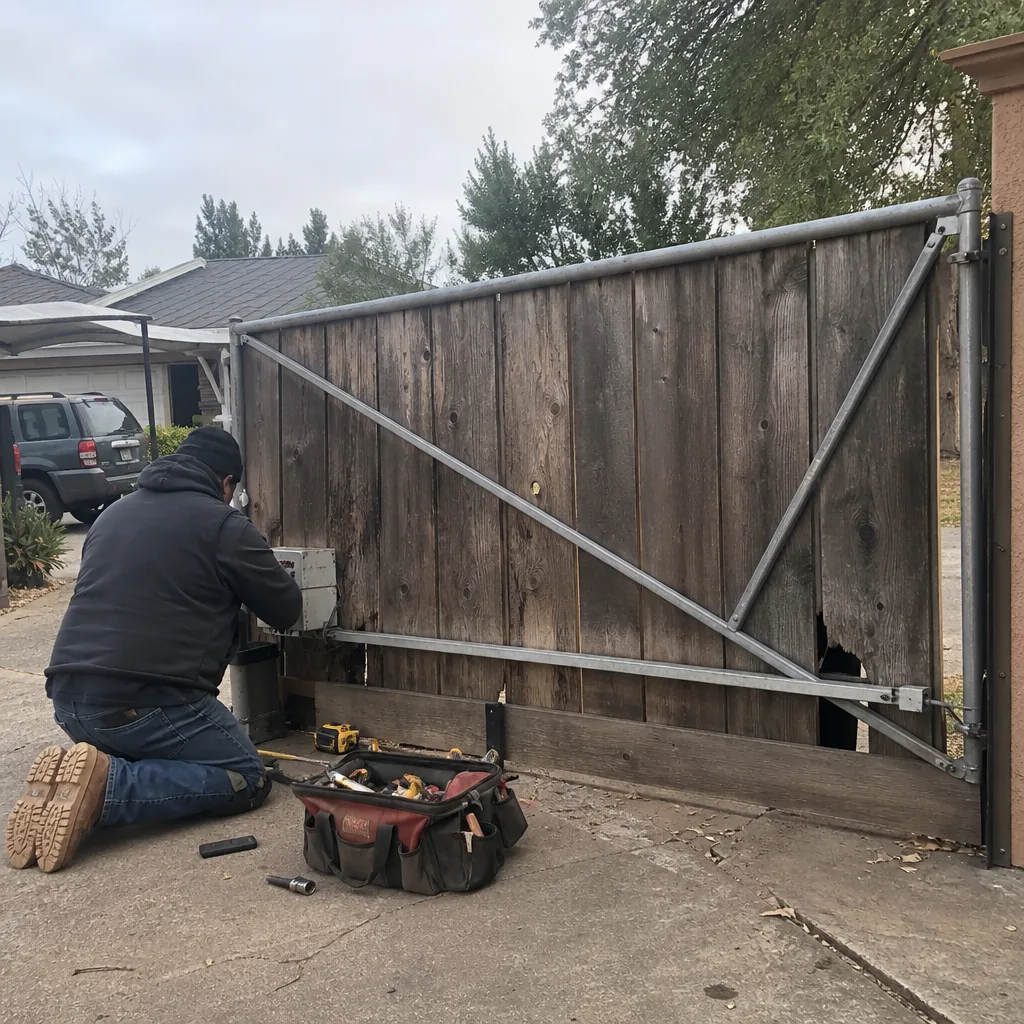 Before
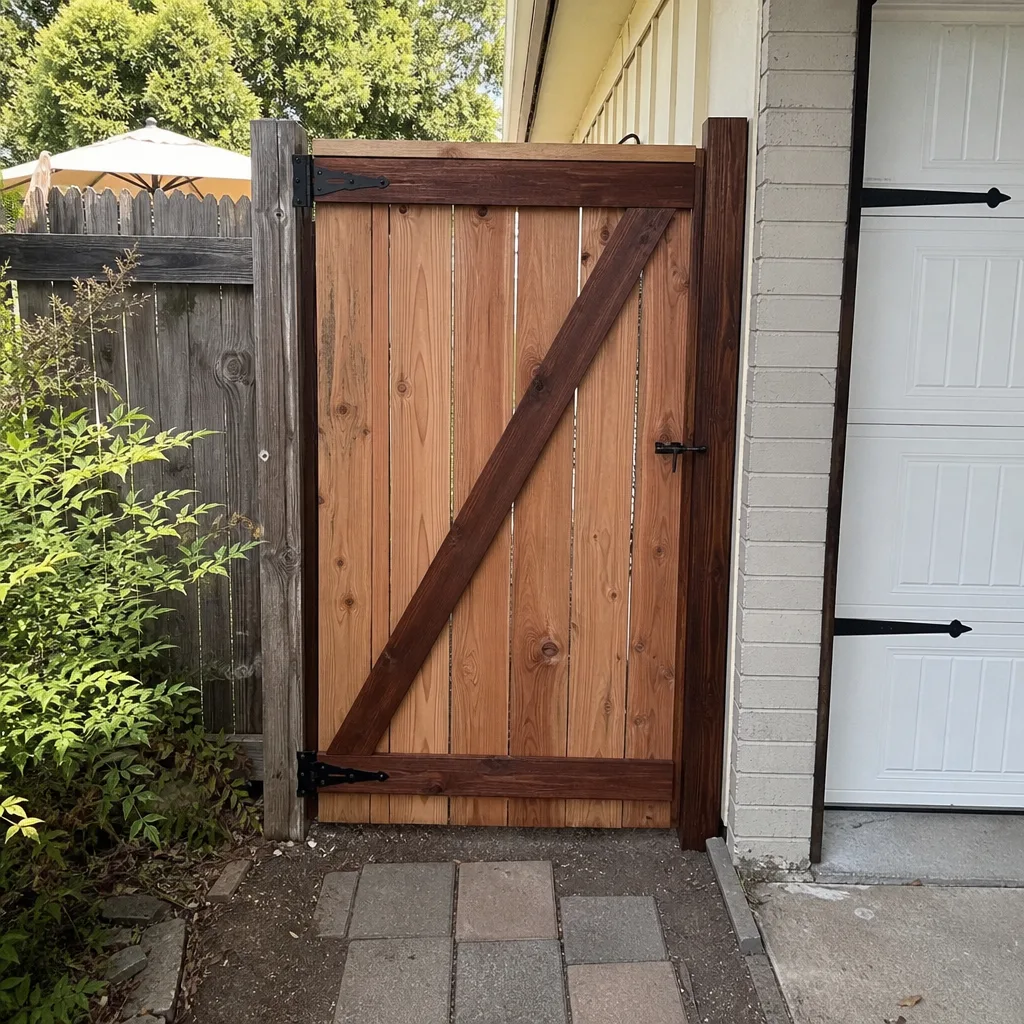 After
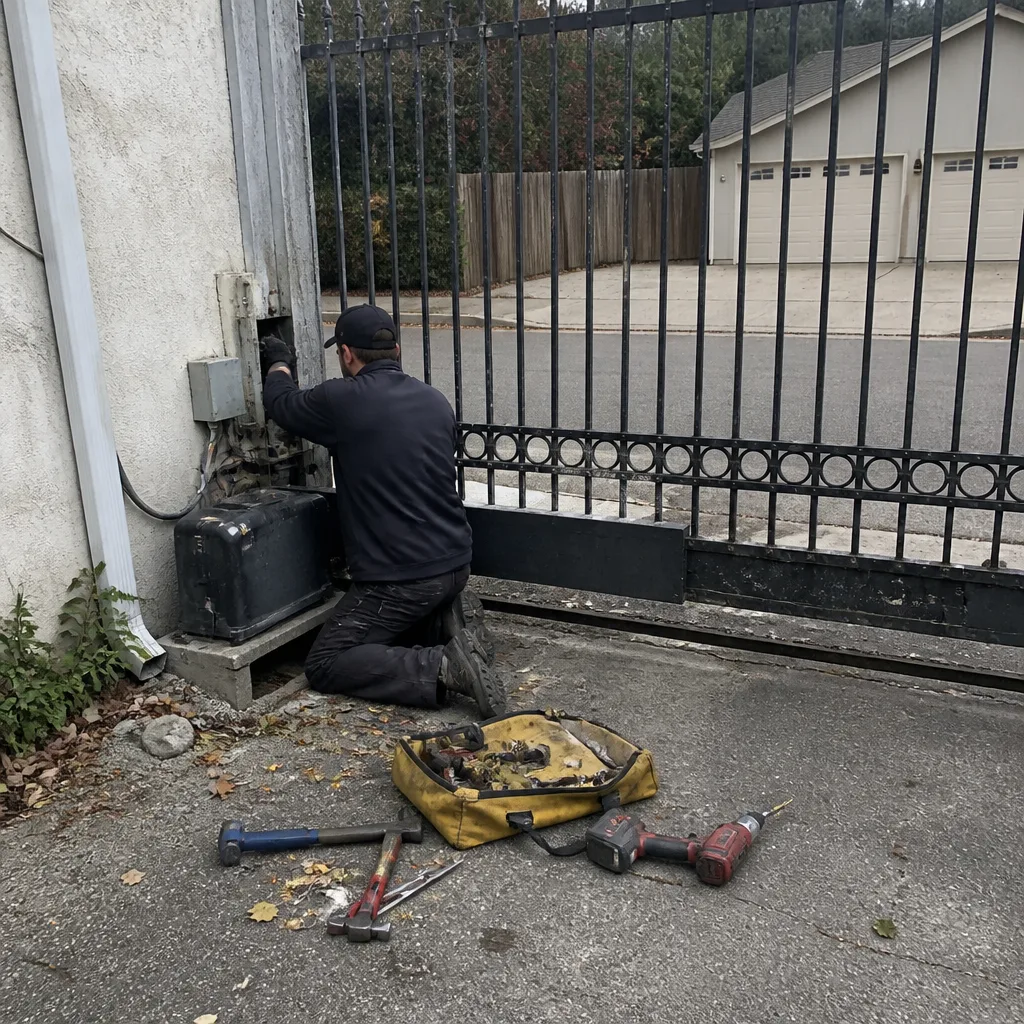 Before
 After
 Before
 After