
Last updated November 2, 2026
 Wrought iron
 Wood & steel frame
 Farm & ranch
 Sliding driveway gates
 LiftMaster operators
Free on-site gate assessment - hinges, posts, and your LiftMaster or Nice gate operator checked before anything is quoted
The assessment is free and the quote is the invoice.
Get your free estimateDIY vs Professional Gate Repair: The Citrus Heights Homeowner’s Decision Guide
Adjusting a gate’s travel limits is a five-minute job any homeowner can do with the operator manual. Rewiring a loop detector is not. The difference matters because one creates a safety hazard if done wrong and the other just wastes an afternoon. Most Citrus Heights homeowners don’t realize that the line between a DIY-appropriate gate repair and a professional-only job isn’t about skill level or tool collection. It’s about whether the task involves safety-critical components, proprietary electronics, or failure modes that multiply when fixed incorrectly. This guide draws that line clearly, drawing on years of Gate Repair services where a $40 “fix” turned into a $900 repair. We’ll walk through what you can genuinely handle, what you legally shouldn’t touch in California, and how to save money without creating a bigger bill.
Quick Answer
DIY gate repair in Citrus Heights is appropriate for roughly 15 to 20 percent of gate problems: visual inspections, hinge lubrication, minor bolt tightening, clearing debris from tracks, and simple limit adjustments on certain operators. Everything involving torsion springs, hydraulic arms, circuit boards, loop detectors, and any UL 325 safety component should go to a trained gate technician. The core issue isn’t whether you can turn a wrench. It’s whether getting it wrong creates a safety risk or a repair that costs triple what the original fix would have.
Styles & brands we work with
- Wrought iron
- Wood & steel frame
- Farm & ranch
- Sliding driveway gates
- LiftMaster operators
Table of Contents
- The Definitive List: What a Competent Homeowner Can Actually Do
- UL 325 and California Law: What’s Illegal to DIY Even If You Know How
- The Three Most Expensive DIY Gate Repair Mistakes We See in Citrus Heights
- How to Use Your Manual and Online Resources for Legitimate DIY Work
- The Hybrid Approach: When Doing Half the Work Yourself Actually Makes Sense
- What DIY Actually Costs vs Professional Gate Repair in Citrus Heights
- Common Mistakes to Avoid
- When to Call a Professional
- Frequently Asked Questions
The Definitive List: What a Competent Homeowner Can Actually Do
Let’s be direct about this. There are a handful of gate maintenance and minor repair tasks that a responsible Citrus Heights homeowner can handle without professional help. None of them involve removing tension from springs, opening control boxes to rewire anything, or adjusting anything that affects how the gate reverses on obstruction. Here’s the full list, with the caveats that matter.
Visual inspection and documentation. This is the most underrated DIY task in gate ownership. Every six weeks, walk the full length of your gate. Look at the hinge welds, the operator arm attachment point, the chain or belt tension, the wheel condition on sliding gates, and any rust forming at the base of posts. Take photos with your phone. When a problem develops later, those photos help a technician diagnose faster. In Citrus Heights, where summer temperatures hover in the mid-90s and gates expand in the heat, checking the gap between the latch post and the gate edge is a good habit. A gate that fits fine in January may bind in August.
Lubrication of hinges and rollers. Use a silicone-based spray lubricant on hinge pins and sliding gate rollers. Do this twice a year. Avoid WD-40 for this job, it’s a solvent that strips existing lubrication and attracts dust. The dry Sacramento Valley summers and the occasional wet winter both create friction issues on gate hardware. Lubrication prevents the majority of mechanical wear we see. This is a ten-minute task and you can’t hurt anything doing it.
Tightening loose bolts and brackets. Gates cycle thousands of times a year. Vibration loosens hardware. If you see a bracket that’s worked loose and you can reach the bolt with a wrench, tightening it is fine. Use lock washers or thread-locking compound if the bolt keeps loosening. What’s not DIY is any bolt under tension from a counterweight or spring. If the bolt resists because something is pulling on it, stop.
Clearing debris from slide tracks. Sliding gates collect leaves, gravel, and dirt in the track. A clogged track causes the gate to strain, which trips the overload sensor, which eventually kills the motor. Sweep the track out. Check for rocks wedged against the wheels. In Citrus Heights neighborhoods with mature oak trees, acorns are a constant track-filler come fall. This is genuinely DIY and genuinely important.
Limit adjustment on certain operators. Some LiftMaster and Mighty Mule operators have clearly marked limit adjustment screws or digital limit menus. If your gate stops short or overtravels and the manual covers the adjustment procedure step by step, this is a DIY task. Many of these adjustments take under five minutes and involve turning a screw a quarter turn at a time. The caveat: if the manual says to call a technician, or if the adjustment involves the reversing loop or photo eye, don’t do it yourself. And never adjust limits to force a gate past visible binding. That’s masking a problem, not fixing one.
That’s the complete list. Everything else, from replacing a bent hinge under load to swapping out an operator arm, involves either stored mechanical energy or electrical work that can create a safety hazard.
UL 325 and California Law: What’s Illegal to DIY Even If You Know How
Here’s the part most “DIY gate repair” content never mentions. Automated gates in the United States are regulated by UL 325, the Standard for Safety for Door, Drapery, Gate, Louver, and Window Operators and Systems. California incorporates UL 325 compliance into state building code. What that means practically in Citrus Heights: certain modifications and repairs to an automated gate system are not just risky, they’re legally non-compliant if done outside the standard.
UL 325 mandates specific safety features on every automated gate. External entrapment protection devices: photo eyes, reversing edges, or both depending on the gate type. A built-in reversing mechanism that stops and reverses the gate when it contacts an obstruction with a specific amount of force. Warning signage on the gate itself. These aren’t suggestions. They’re legal requirements, and a gate operator that doesn’t comply is a code violation.
The reason DIY work becomes illegal is that a homeowner who bypasses a photo eye, disables a reversing edge, or adjusts the force setting higher to “stop the false reversals” has taken a UL 325 compliant gate and made it non-compliant. If that gate then injures someone, the homeowner faces liability that insurance may not cover because the modification was performed outside code compliance. This is not a scare tactic. We have seen gates in Citrus Heights with safety edges disconnected because a previous owner found them “annoying” when they false-triggered. That gate will not reverse if a child, a pet, or a delivery driver is in its path.
Specific tasks that must be performed by someone who understands UL 325 compliance include: installation or adjustment of photo eyes and reversing edges, replacement of the operator control board, modification of the gate’s force settings beyond the manufacturer’s factory range, and addition of any entrapment sensor to an existing system. A California homeowner is allowed to maintain their gate and perform non-safety-critical tasks. The moment the repair touches entrapment protection, it crosses into work that should be done by a gate professional.
This also matters for property managers in Citrus Heights. A rental property gate that injures someone because a handyperson bypassed a safety sensor is a lawsuit with a very clear paper trail. The cost of defending that is orders of magnitude larger than paying for a proper repair. In our experience, the property managers who call us understand this. The ones who don’t are the ones who end up explaining a photo eye bypass to their insurance carrier.
The Three Most Expensive DIY Gate Repair Mistakes We See in Citrus Heights
Our Gate Repair in Citrus Heights service calls follow patterns. Homeowners in Citrus Heights are resourceful, and when a gate breaks, many of them try to fix it first. That’s reasonable. But three specific DIY repairs account for a disproportionate share of the expensive follow-up work we do. Here they are, specific and current.
1. Forcing a binding gate by cranking up the force limit. A gate starts binding on its hinges or track. The operator struggles, then stops and reverses. The homeowner reads online to “adjust the force setting up a little.” The gate starts moving again. The binding hasn’t been fixed, it’s been overpowered. The motor now works harder on every cycle, cooking the capacitor and burning the gearbox over the next few weeks. When the gate finally dies completely, the repair is a new operator, not a hinge adjustment. We’ve replaced operators in Citrus Heights that died this way after 18 months of service, where the original binding issue would have been a $200 hinge repair. The operator replacement: $1,400 and up.
2. Rewiring or bypassing a photo eye that “keeps false-triggering.” Photo eyes false-trigger for specific reasons. Misalignment. Direct sunlight hitting the lens. Dirty lens covers. A loose mounting bracket. A wiring connection that’s corroding. A homeowner who can’t find the cause sometimes just twists the wires together to close the circuit and “fix” the problem. The gate now works, and it now has no external entrapment protection on that side. It’s a UL 325 violation, it’s dangerous, and fixing it properly later costs more because the wiring has been hacked and the original problem remains. We’ve had to re-run photo eye wiring in Citrus Heights where the homeowner’s splice was buried in a flower bed and failed after irrigation water got into it.
3. Removing a gate from its hinges to “fix” a sag, then finding the post is rotten or cracked. A sagging gate is a symptom, not the problem. The cause is usually a failing hinge, a deteriorating post, or the gate frame itself losing structural integrity. A homeowner who removes the gate to replace a hinge sometimes discovers the post crumbles when they put the hinge screws back in. Now the gate is off its hinges, the post needs replacement, the gate is blocking the driveway, and the repair is now an urgent call to a professional. We see this in Citrus Heights neighborhoods with older wooden gates and post bases that sit in sprinkler water or clay soil that holds moisture. A post replacement is concrete work. It’s not a hinge job anymore.
All three of these follow the same logic: the DIY repair addressed the symptom, not the cause, and the operator or structural damage accumulated until the final repair cost far exceeded what the original repair would have. That’s the real cost of DIY gate repair, not the $30 you saved on the service call.
How to Use Your Manual and Online Resources for Legitimate DIY Work
If your gate problem falls into the DIY-appropriate list above, do it right. The single best resource you have is the operator’s installation manual, though our more guides & resources can also help. Most Citrus Heights homeowners never read theirs, and that’s a shame because the manual answers 80 percent of minor gate questions.
Step one: find your model number. On most operators, it’s on a sticker on the side or bottom of the operator housing. LiftMaster units have it near the wiring access panel. Mighty Mule and Ghost Controls operators have it on the control box. FAAC and BFT operators have it engraved on a plate on the arm or the box. Write it down. Take a photo.
Step two: search the exact model number plus the symptom. “LiftMaster LA400 limit adjustment” is a search that will return the manufacturer’s PDF manual, not forum speculation. The PDF manual contains the exact limit adjustment procedure for that exact model, with torque settings and caveats. Use the manufacturer’s document, not a YouTube comment.
Step three: watch a repair video for your exact model, not a general “gate repair” video. A video showing a DoorKing operator arm replacement doesn’t help you if you own a FAAC 412. Gate operators are not interchangeable in their service procedures. The brand-specific video, from either the manufacturer or a gate-specific technician, is worth ten generic videos.
Step four: understand your own limits honestly. You can adjust a limit that’s clearly described. You can’t diagnose a fault code without the context of having seen a hundred of the same errors. The manual will list fault codes, but interpreting them takes experience. If the manual says “contact a qualified technician” next to the code you’re seeing, that’s not the manufacturer being protective. That’s the manufacturer telling you the fix requires more than the manual can convey.
One more resource that Citrus Heights homeowners use well: the original installer. If your gate was installed by a local company and that company is still around, call them. They have your gate’s history, the original installation notes, and they know what’s been changed. A ten-minute phone call can tell you whether the problem is DIY-appropriate or not.
The Hybrid Approach: When Doing Half the Work Yourself Actually Makes Sense
There’s a middle ground between full DIY and handing everything to a gate company. The hybrid approach works like this: you handle the parts of the repair that are labor-only and safe, the professional handles the diagnosis and the safety-critical work. In Citrus Heights, where gate service calls are measured in the time it takes to drive across Sunrise Boulevard or up Greenback Lane, this can genuinely reduce a bill.
What you can do in a hybrid repair:
- Clear the work area. Trim back plants around the gate, move vehicles, clear debris from the track. A technician who doesn’t spend 20 minutes fighting ivy is a technician who spends 20 minutes fixing your gate.
- Document the problem. Video the gate failing. Record the sounds. Note when it happens: only in the morning, only when hot, only after rain. This is diagnostic information that would take a technician time to discover.
- Remove the gate’s cosmetic covers. If your operator has a plastic shroud over the control box and you can remove it safely without touching wiring, do so. The technician can get to work immediately.
- Have the manual ready. The paper manual or the PDF on your phone. It saves the technician from having to look up your specific model’s wiring diagram.
- Source the cosmetic parts yourself. If your gate’s pickets are rusted and you want to replace them, you can buy the pickets and handle that. The structural and safety work stays with the professional.
What stays with the professional in a hybrid repair: diagnosis of electrical faults, anything involving the operator’s capacitor or control board, spring tensioning, welding, safety sensor alignment and verification, and any work that requires removing the gate from its hinges.
The hybrid approach is often the smartest option for Citrus Heights homeowners who want to save money without assuming liability. You invest sweat equity on the safe and simple parts. The gate technician invests expertise on the parts where mistakes compound into larger repairs. A company that specializes exclusively in gates will happily work this way with you. A generalist who needs to bill the whole job may resist it.
What DIY Actually Costs vs Professional Gate Repair in Citrus Heights
Let’s put numbers to this. The DIY-versus-professional decision is usually framed as “free labor vs paid labor,” but that framing is incomplete. The real comparison includes parts, tools, time, risk, and the cost of correcting a mistake.
Typical minor repair: hinge replacement on a single swing gate.
- DIY cost: $20 to $60 for a hinge kit. One afternoon of your time. Risk: if the post is rotten or the gate is under tension, this repair escalates into post replacement or gate re-hanging. Typical professional cost in Citrus Heights: $180 to $350 including labor and standard hardware.
- When the repair stays simple, DIY saves money. When it doesn’t, the professional route would have been cheaper in total.
Typical moderate repair: photo eye replacement on an automated gate.
- DIY cost: $40 to $120 for a replacement photo eye pair. Risk: alignment and wiring must be correct, or the gate won’t pass UL 325 compliance. A DIY photo eye that’s wired wrong is worse than none at all because it gives false confidence. Typical professional cost in Citrus Heights: $220 to $420 including the eye, wiring verification, alignment, and a functional test.
- This is a repair where the professional cost is mostly the verification that the safety system works. That verification is the entire point.
Typical major repair: operator replacement on a sliding gate.
- DIY cost: $600 to $1,500 for the operator unit, plus whatever you spend on the structural mounting and wiring. Risk: improper mounting puts shear forces on the drive mechanism and destroys the new operator within a year. A botched operator replacement can also void the manufacturer’s warranty. Typical professional cost in Citrus Heights: $1,400 to $3,000 installed, including old operator removal and proper torque.
- Operator warranties frequently require professional installation to remain valid. Check the fine print before buying a unit to install yourself.
Here’s the number that matters most. In our experience in Citrus Heights, a professional gate repair starts with a diagnosis that is part of the service. A good gate technician doesn’t charge $150 to show up and then quote a repair. They arrive, diagnose, and quote the repair with the price known before work starts. That removes the biggest cost risk: paying for a repair that doesn’t fix the problem. A DIY repair that doesn’t work costs the parts, the time, and then the professional repair on top. The professional route from the start costs only the repair. When you factor in the cost of a failed DIY attempt, the break-even point moves sharply toward professional repair on anything beyond the minor maintenance list above.
Our Electric Gate Repair in Citrus Heights work often starts as a quote for the repair the homeowner thought they needed, based on their own diagnosis. Sometimes they’re right. Sometimes the actual problem is simpler and cheaper. Sometimes it’s different and more urgent. Either way, the diagnosis happens before the price, so there are no surprises on the invoice.
Common Mistakes to Avoid
- Adjusting the force setting to compensate for a binding gate. You’re treating a symptom, and you’re burning out your motor in the process. The binding has a cause. Find the cause or have it found.
- Bypassing a photo eye that keeps false-triggering. This is the most dangerous DIY decision possible on a gate. A false-triggering photo eye has a fixable cause. Bypassing it removes your entrapment protection and puts you in legal non-compliance with UL 325.
- Ordering a replacement part based on a forum recommendation without checking your model number. Gate operators have exact model match requirements for control boards, arms, and limit components. The wrong part won’t work, and installing it can damage the new part.
- Greasing a chain drive with whatever is in the garage. Heavy grease on a modern belt or chain drive attracts Sacramento dust and creates a grinding paste. Use the lubricant specified in the manual, or a light silicone spray.
- Welding a cracked gate frame without understanding the original failure. A crack in a gate frame is usually a stress point from an improper hinge or a racked post. Welding the crack without fixing the cause just moves the crack to the next weak point.
- Removing a gate from its hinges to “look at something” without a clear re-hanging plan. Gates under load are deceptively heavy. Once the gate is off, you have a several-hundred-pound object blocking your driveway and a post that may not accept the hinge bolts again. If you’re not sure you can get it back on, don’t take it off.
When to Call a Professional
Call a gate professional when the problem involves any of these: spring tension or counterweight systems, hydraulic arms, operator control boards, loop detectors (the wire loops in the driveway that detect vehicles), photo eyes and reversing edges, any electrical work inside the control box, or a gate that has come off its track or hinges. Also call when the gate has failed twice in the same way, because a repeating failure means the root cause hasn’t been addressed. For Citrus Heights homeowners, Gate Installation in Citrus Heights is also a service available for those who discover their gate is beyond economical repair. Gate Repair Citrus Heights offers free estimates in Citrus Heights, call (877) 752-5078.
Frequently Asked Questions
Gate repair in Citrus Heights typically ranges from $180 to $3,000 depending on the repair type. Minor hinge or bracket repairs run $180 to $350. Photo eye and safety sensor replacements run $220 to $420. Operator replacements run $1,400 to $3,000 installed. The price is always quoted and agreed before any work starts. Call (877) 752-5078 for a free estimate on your specific gate.
Yes, on many LiftMaster, Mighty Mule, and Ghost Controls operators, the limit adjustment is a clearly documented procedure in the owner’s manual that takes under five minutes. The key is following the exact procedure for your exact model number and never adjusting limits to force a gate past visible binding. If the manual says to contact a technician, or if the adjustment involves safety sensors, call a professional.
UL 325 is the safety standard that governs automated gate operators in the United States, and it’s incorporated into California building code. It requires entrapment protection devices like photo eyes and reversing edges, a built-in reversing mechanism, and warning signage. Any DIY modification that bypasses or disables these features makes your gate non-compliant and creates liability if someone is injured.
For urgent safety issues such as a gate that won’t close or an operator malfunctioning, same-day service is available – see our Gate Repair Emergency Preparedness Guide for Citrus Heights Homes for what counts as urgent. Call (877) 752-5078 and describe the problem, and we’ll let you know our current schedule. For non-urgent repairs, we typically schedule within a few business days.
We service LiftMaster, FAAC, BFT, Linear, Viking, Ghost Controls, DoorKing, Elite, and Mighty Mule operators and gate systems. Our technicians work on these brands every day, so there’s no learning curve on your specific equipment. If your brand isn’t listed here, call us anyway and we’ll tell you honestly whether we can help.
Yes, we regularly repair gates in Citrus Heights where a homeowner attempted a fix and the problem either persisted or got worse. We’ll diagnose what’s actually wrong, fix the original problem and any damage from the DIY attempt, and quote the repair before any work starts. We do this without judgment, it’s part of the job.
The Bottom Line
The DIY versus professional gate repair decision in Citrus Heights comes down to one question: does the repair involve safety-critical components, stored mechanical energy, proprietary electronics, or a failure mode that compounds when fixed wrong? If yes, call a professional. If no, and the repair is on the short list of genuinely DIY-appropriate tasks, use your manual and do it properly. The savings from successful DIY on a hinge or a track cleaning are real. The cost of a failed DIY attempt on a spring, a photo eye, or an operator is far larger than the professional repair would have been. Citrus Heights homeowners have a specialist available for the rest. For Gate Repair Citrus Heights home service, free estimates in and around Citrus Heights, call (877) 752-5078.
Written by the team at Gate Repair Citrus Heights, serving Citrus Heights since 2018.
See the difference
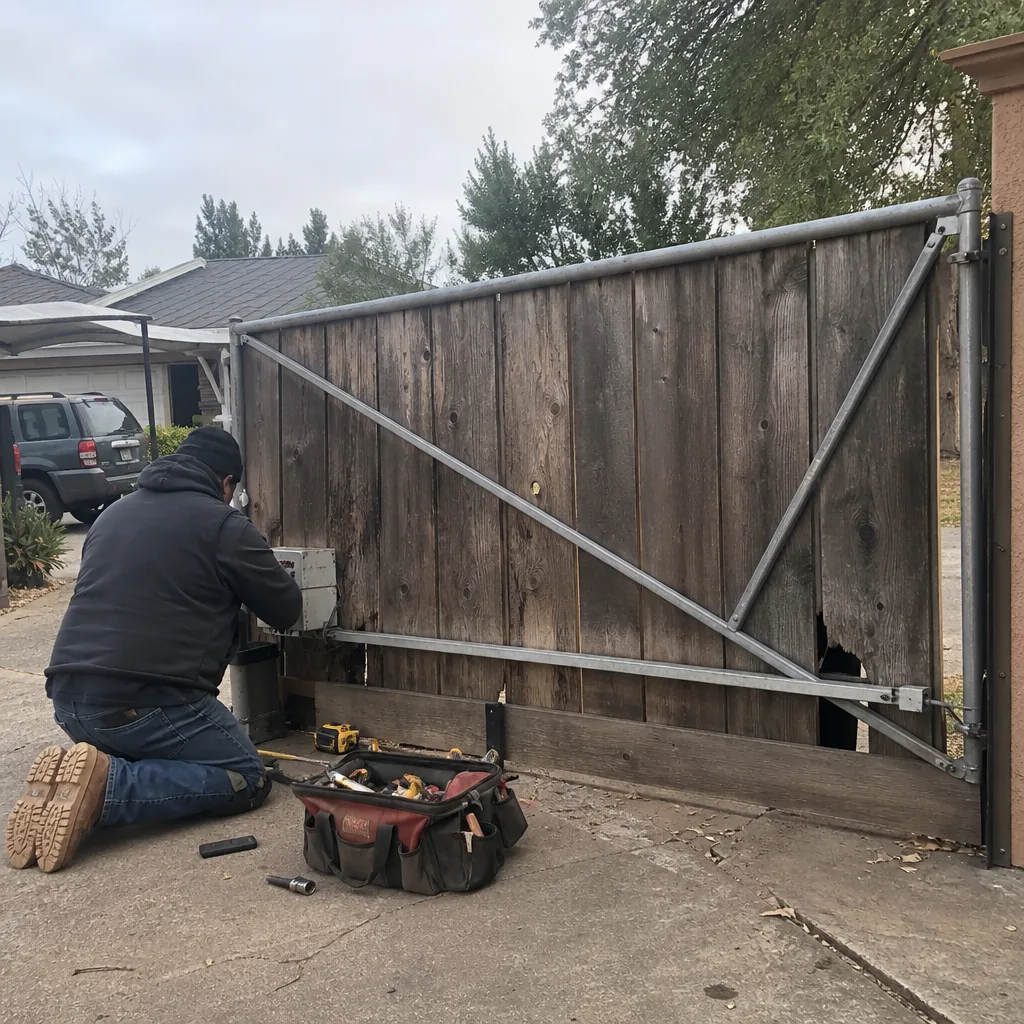 Before
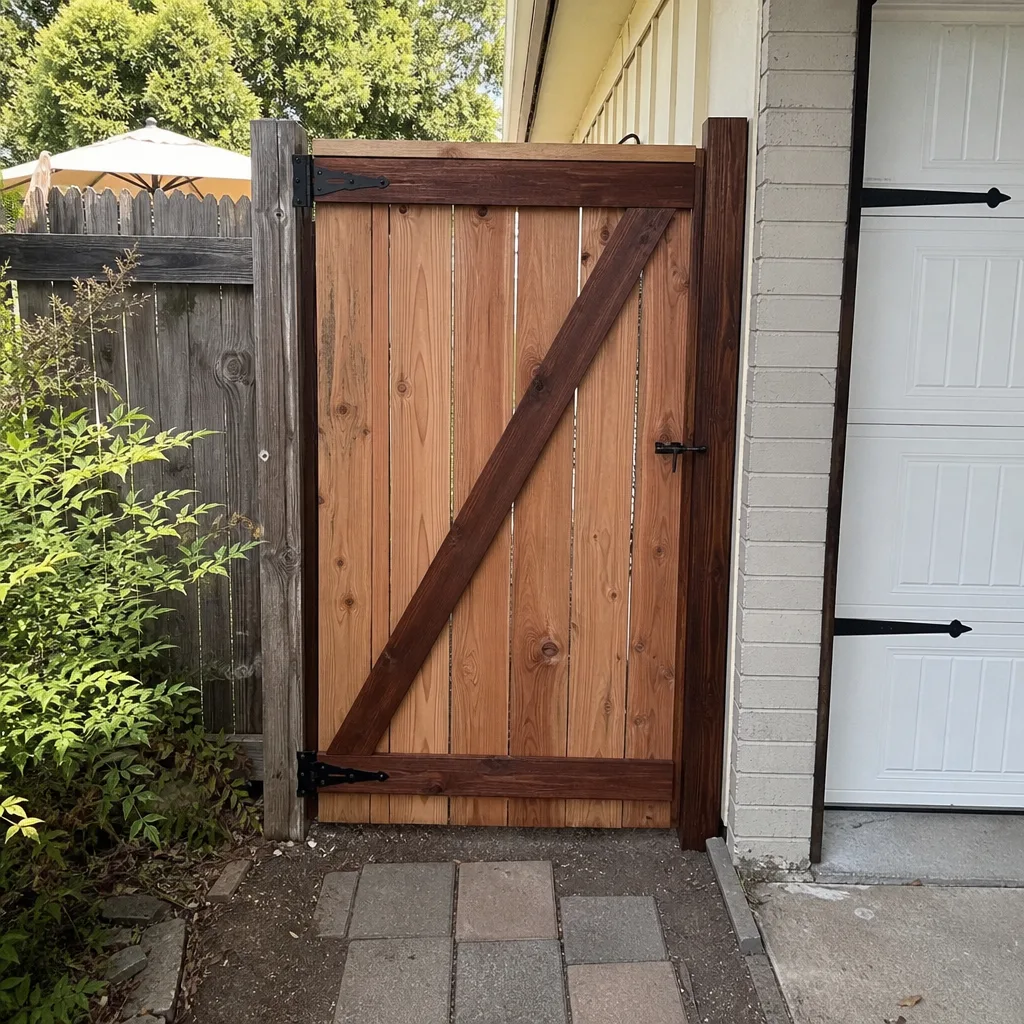 After
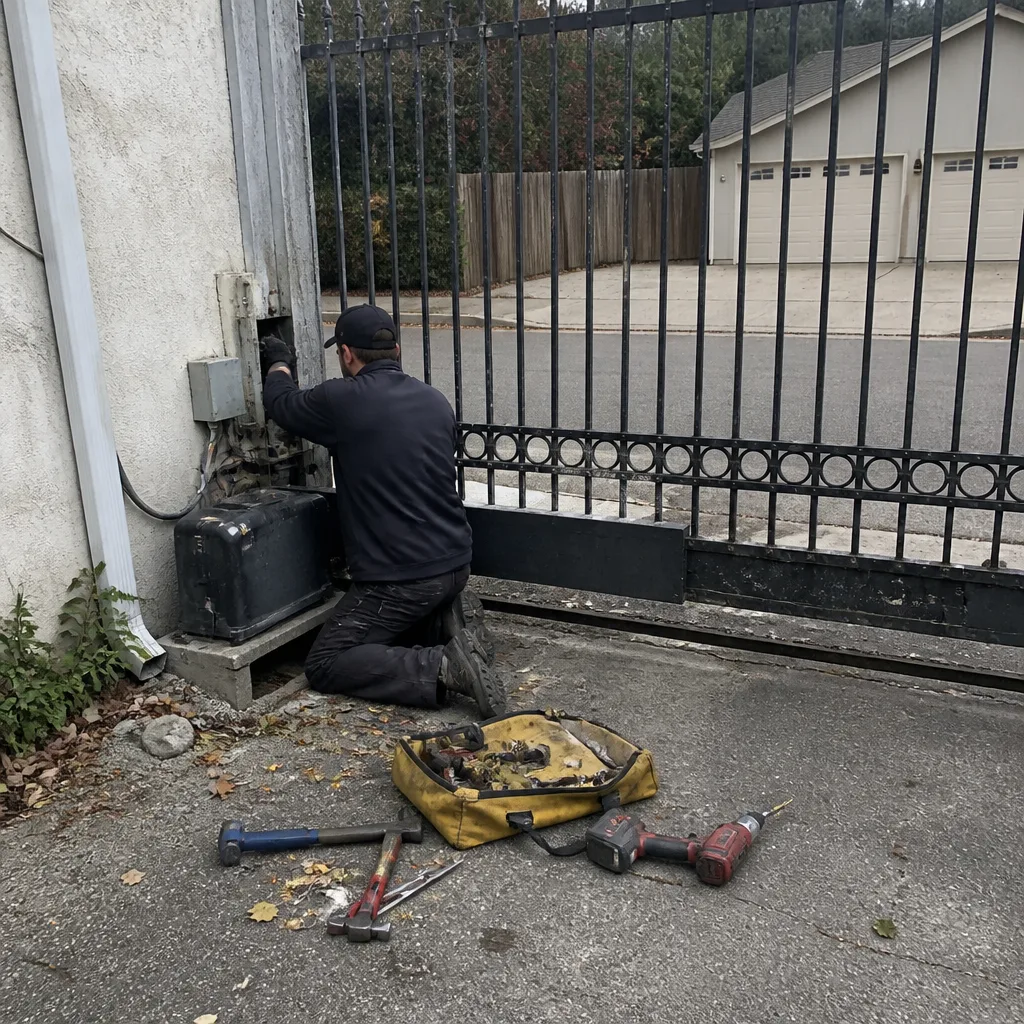 Before
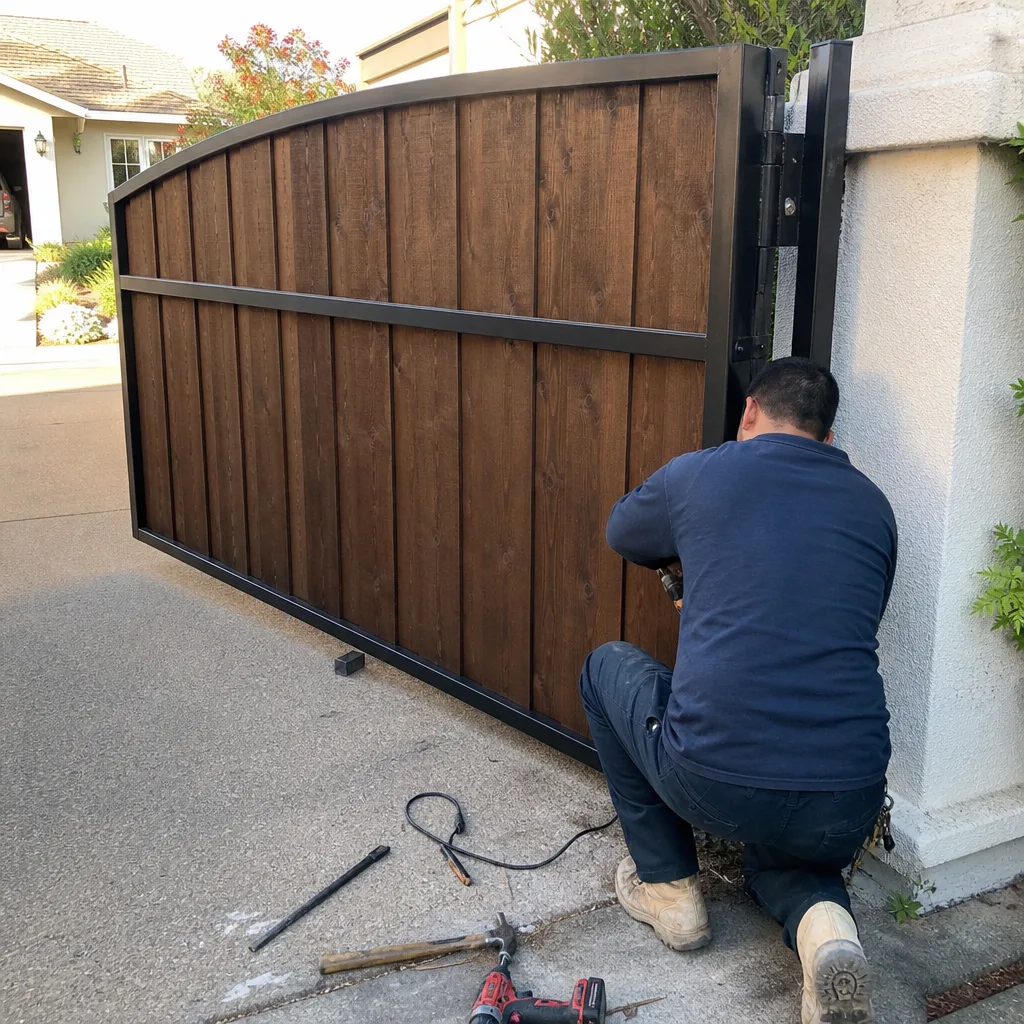 After
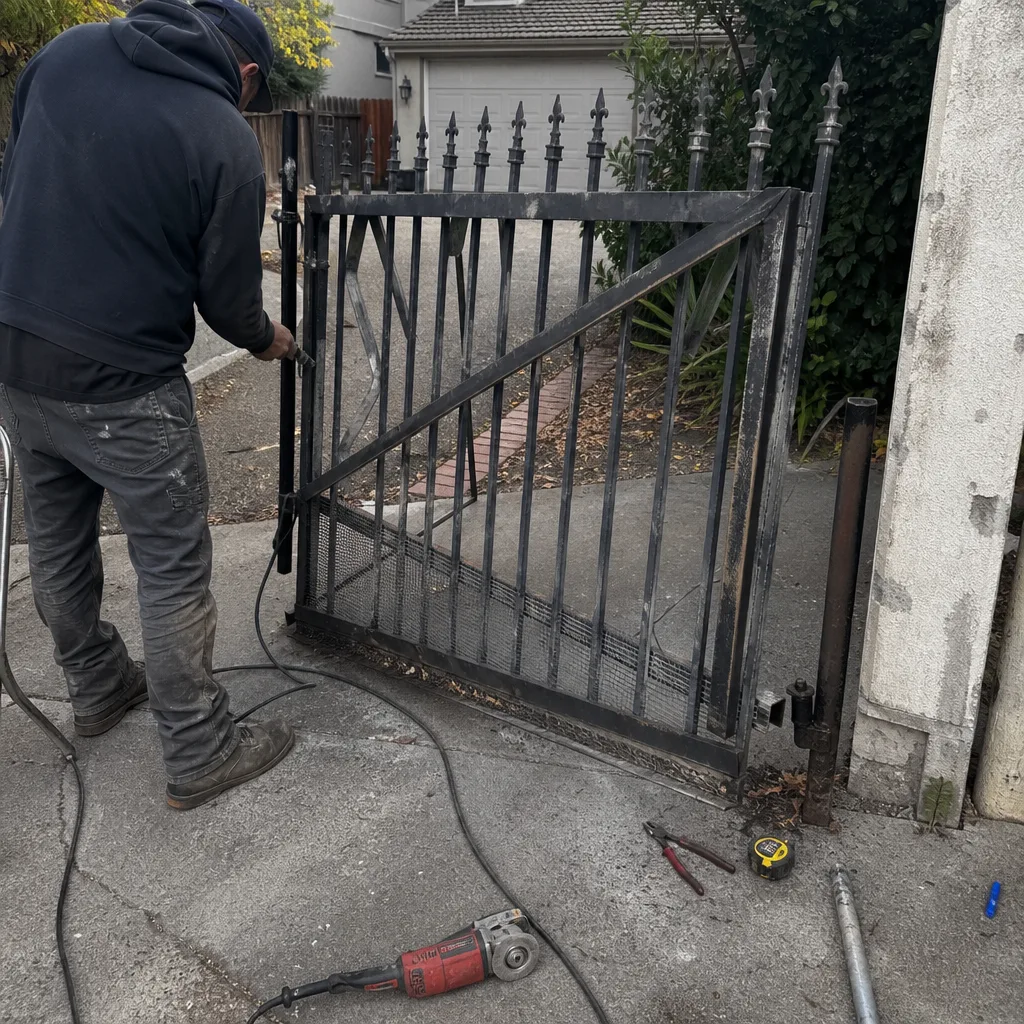 Before
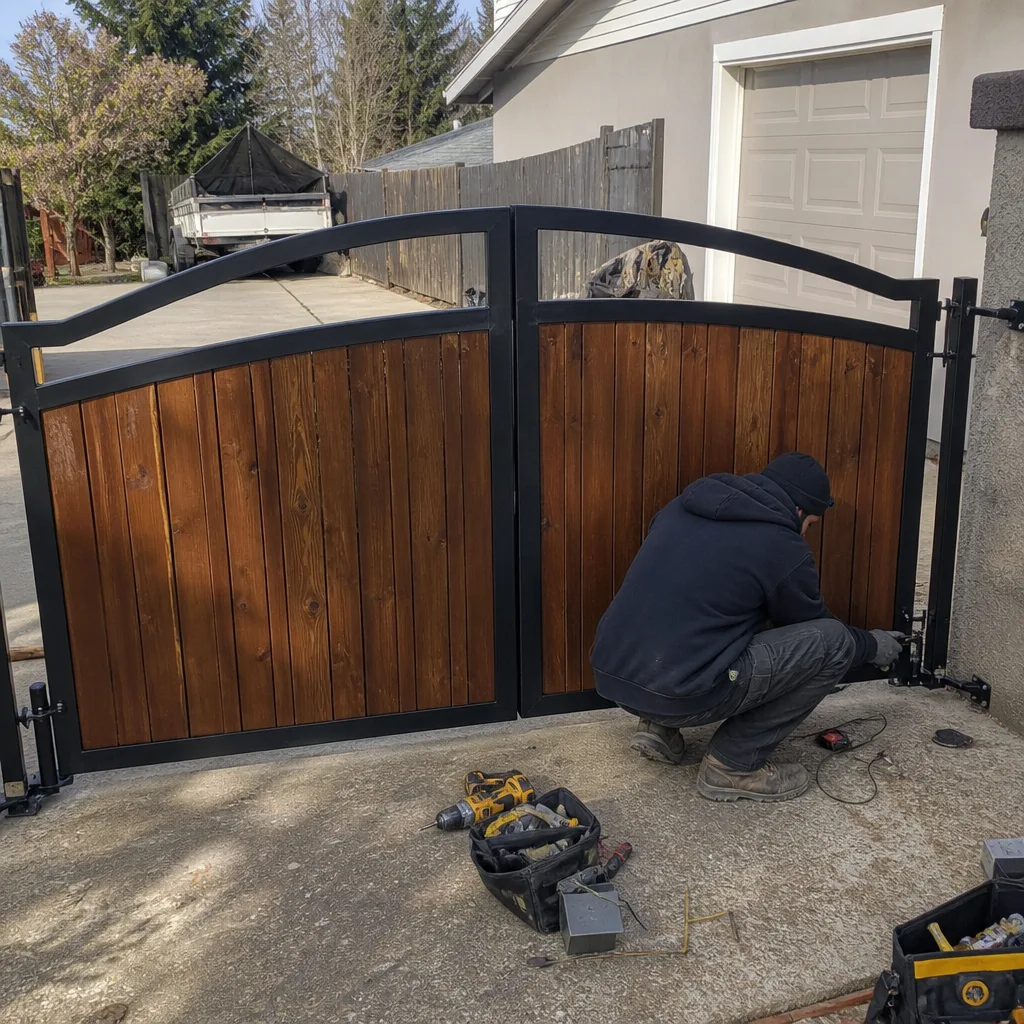 After