
Last updated November 2, 2026
 Wrought iron
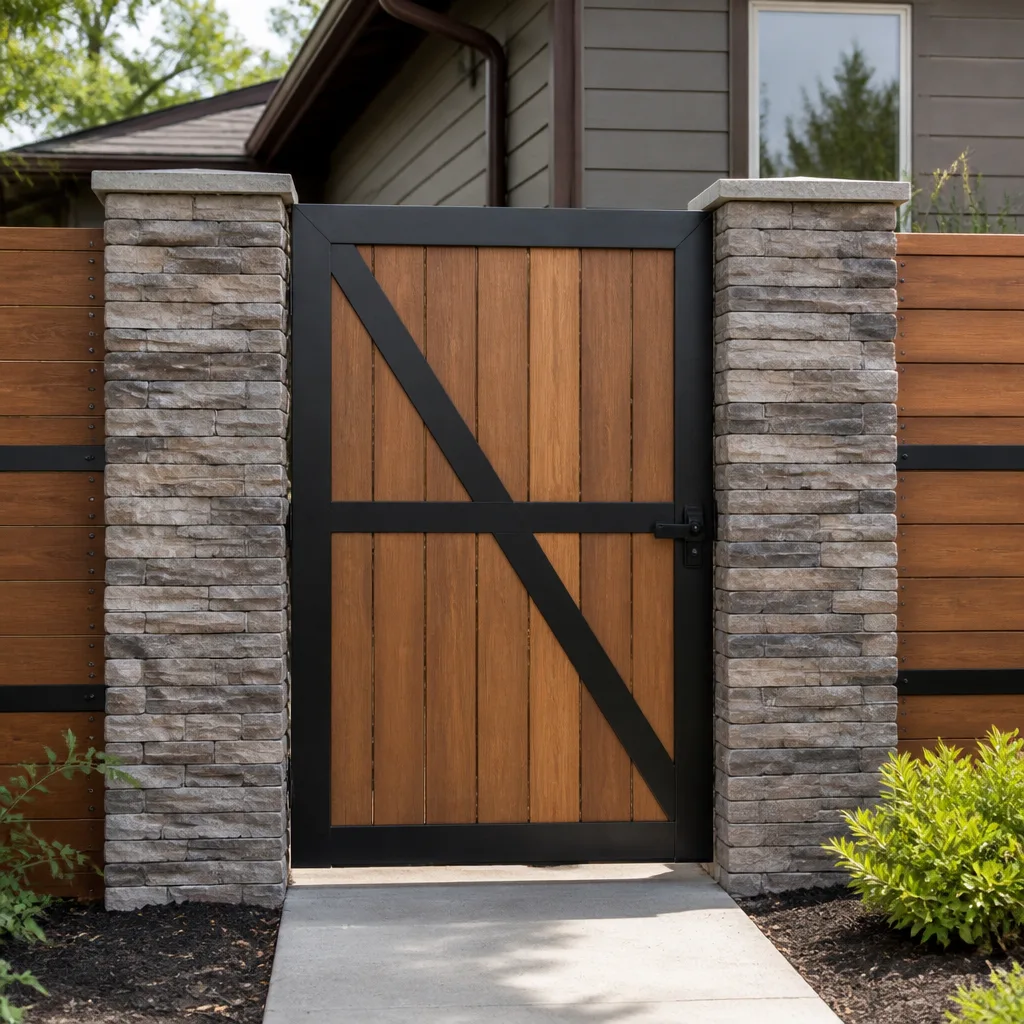 Wood & steel frame
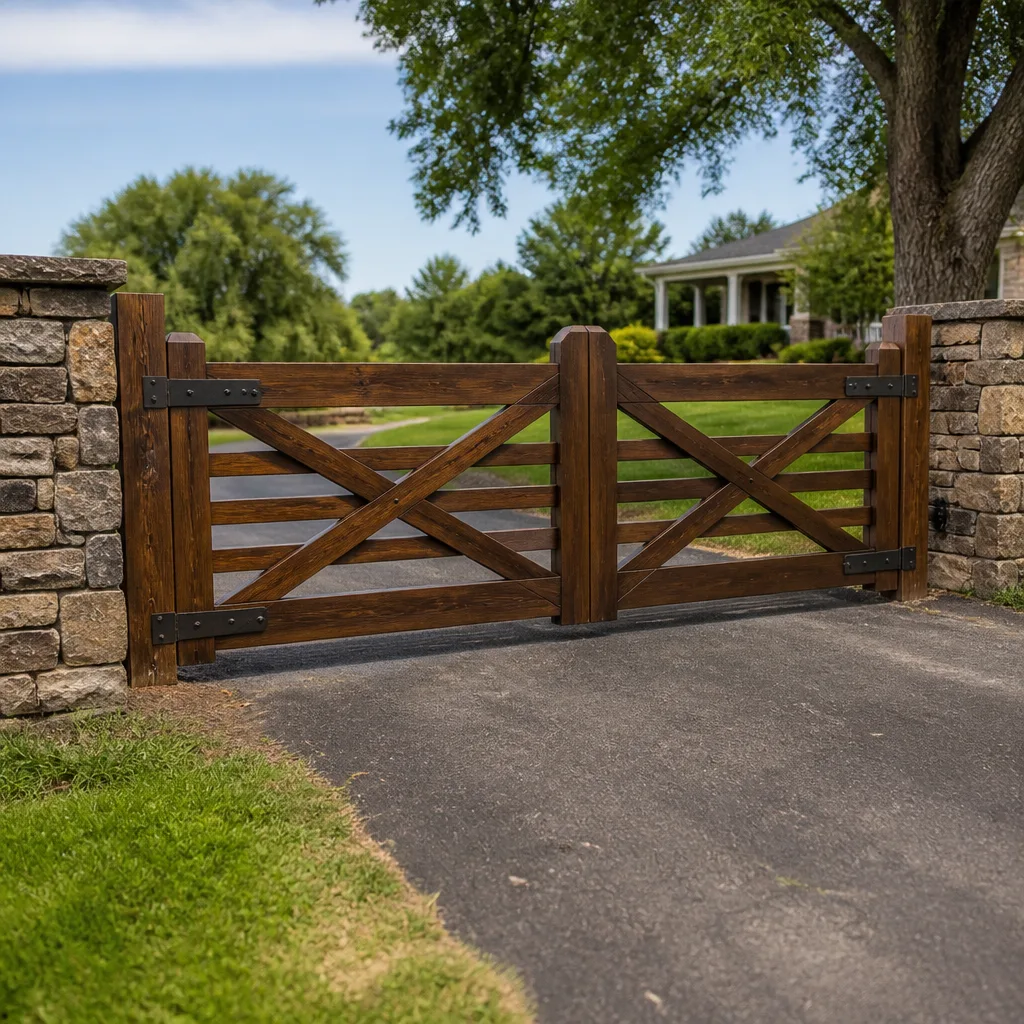 Farm & ranch
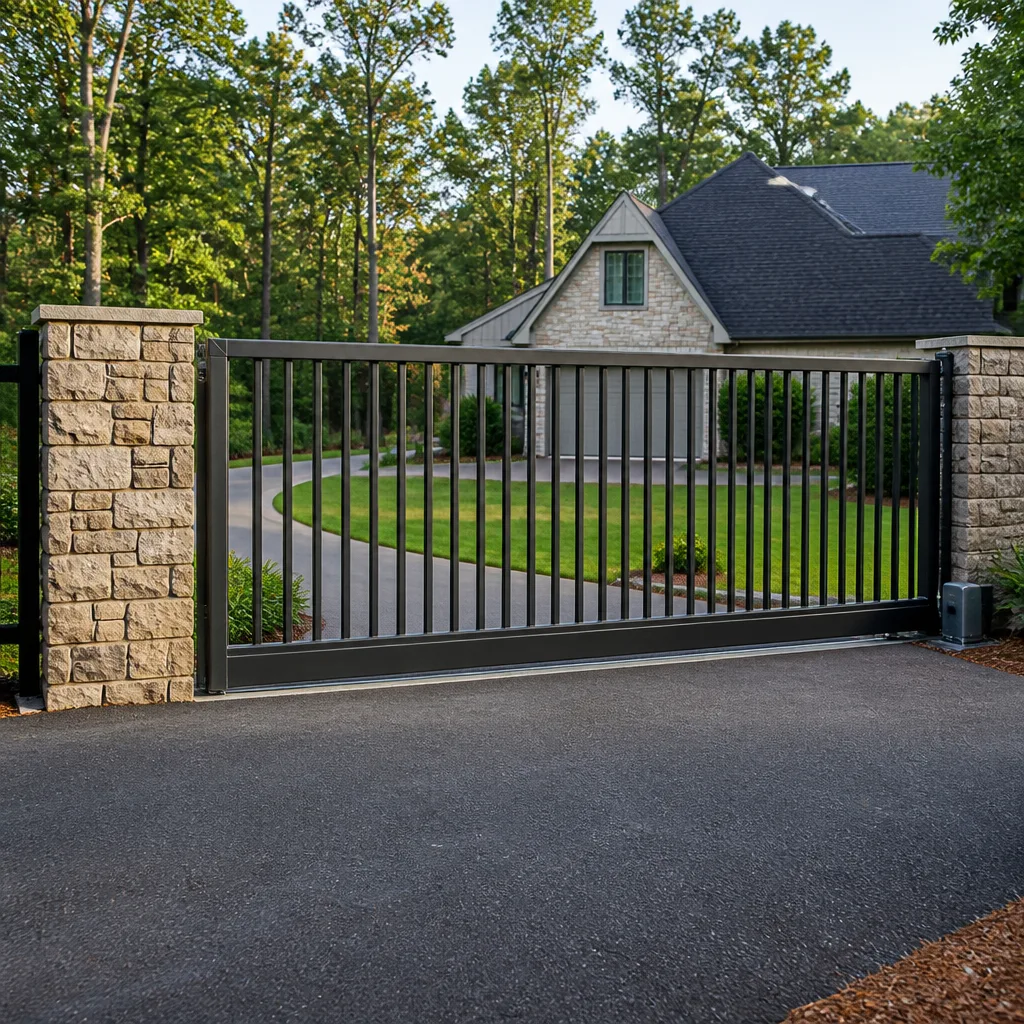 Sliding driveway gates
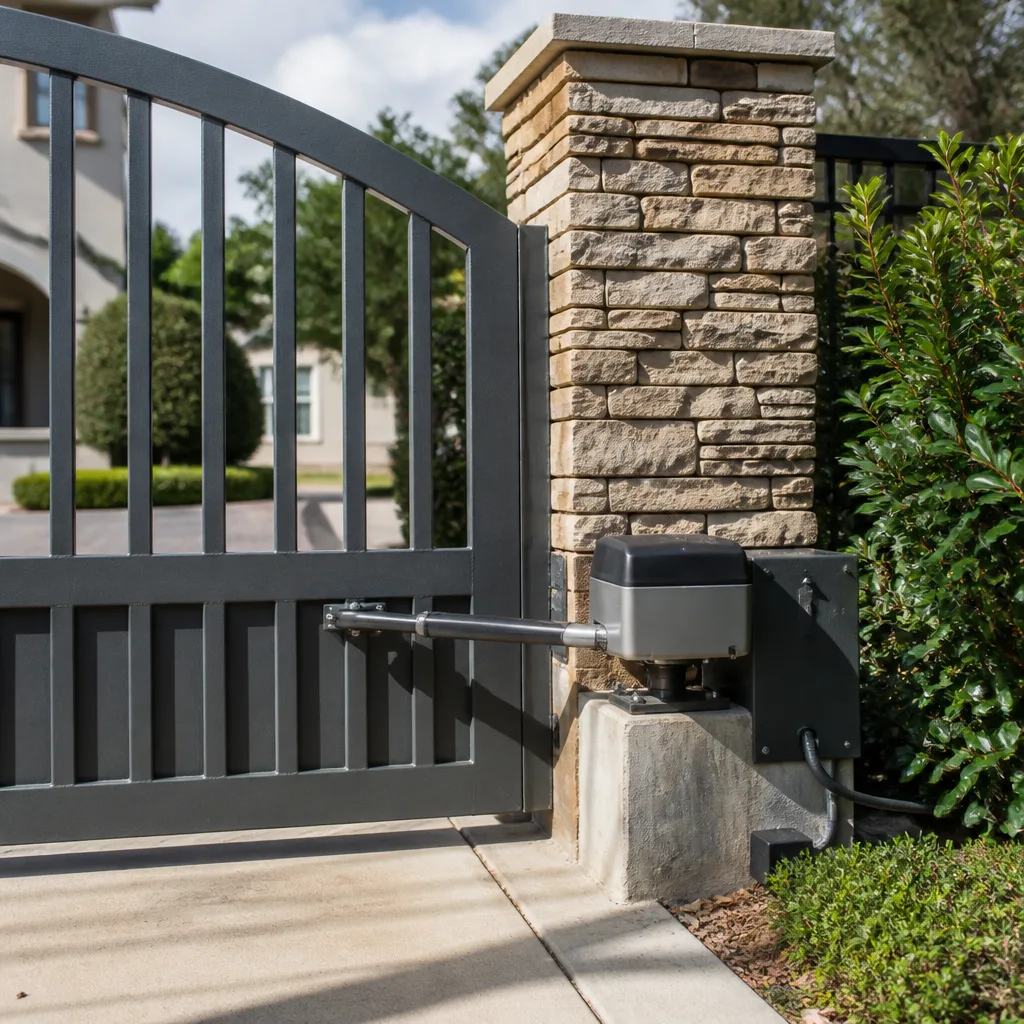 LiftMaster operators
Free on-site gate assessment - hinges, posts, and your LiftMaster or Nice gate operator checked before anything is quoted
The assessment is free and the quote is the invoice.
Get your free estimateGate Repair Emergency Preparedness Guide for Citrus Heights Homes
The moment a gate fails, the clock starts. Not the clock on the repair, but the clock on your security. In Citrus Heights, where a large share of homes use automated gates for driveway access, the difference between a handled situation and a security headache comes down to what you do in the first 30 minutes. Here’s what most people don’t realize: a gate that’s stuck closed is annoying. A gate that’s stuck open at 2am is an invitation. This guide walks through both scenarios step by step, brand by brand, so you’ll know exactly what to do before the failure happens, not while it’s happening.
Quick Answer
When a gate fails in Citrus Heights, start by identifying whether it failed open or closed, then manually disengage the operator using the release mechanism specific to your brand. Secure a failed-open gate with a chain and lock immediately, check for obvious obstructions or power issues, and call a gate repair specialist if basic resets don’t resolve the problem. Have your brand name, operator model, and a photo of the mechanism ready before you call to cut dispatch time in half.
Styles & brands we work with
- Wrought iron
- Wood & steel frame
- Farm & ranch
- Sliding driveway gates
- LiftMaster operators
Table of Contents
- The First 30 Minutes: A Step-by-Step Protocol
- Brand-Specific Manual Release: LiftMaster, FAAC, and Linear
- How to Secure a Failed-Open Gate Without Damaging the Operator
- Power Outage Protocol for Citrus Heights PG&E Outages
- The Case for a Manual Key Override Before You Need It
- What to Have Ready Before Calling for Emergency Gate Repair
- Common Mistakes to Avoid
- When to Call a Professional
The First 30 Minutes: A Step-by-Step Protocol
When an automatic gate fails at 11pm on a Saturday, most Citrus Heights homeowners spend 20 minutes searching for an operator manual that’s been sitting in a garage cabinet since 2019. That delay is the entire problem. The gate isn’t going to fix itself, and every minute it sits unsecured in the open position is a minute your property is exposed. Here’s the sequence we recommend, drawn from what we see on service calls across Citrus Heights neighborhoods from Birdcage Heights to the areas around Sunrise Mall.
Step 1: Determine the Failure Mode
Walk to the gate and look at it. Is it stuck open, stuck closed, or stuck halfway? The answer determines your priority. A gate stuck halfway is the most urgent because it blocks both access and security at the same time. A gate stuck open is a security priority. A gate stuck closed is an access priority. Write down or photograph the position before touching anything.
Step 2: Check for Obvious Obstructions
Look for what we call the Citrus Heights trifecta: fallen branches from oak trees that canopy many older neighborhoods, debris blown against the track by seasonal winds, and rocks or toys that kids leave in the gate path before failing to close it. Clear the path completely and test the gate once. If it moves and stops at the same spot, you’ve found the problem. If not, move to Step 3.
Step 3: Check the Battery Backup and Power
Most operators in Citrus Heights have a battery backup, but it’s not standard. If your gate has one and the battery is dead, the gate won’t respond to the remote. Check the breaker first, then the battery indicator light. A flashing red light on most brands means low battery or fault code. A solid green means power. No light at all means no power to the operator. PG&E outages are common enough in Citrus Heights during summer heat waves that battery condition should be part of your annual check.
Step 4: Disengage the Operator
Before you force any gate open or closed, disengage the operator. Forcing a gate against a connected operator is how you spend $900 on a new gearbox.
Step 5: Secure or Restore Access
Once the operator is disengaged, you can move the gate manually. Decide whether you’re securing it closed or leaving it functional for vehicle entry. If you need vehicle access in the morning, leave it open and follow the failed-open security steps below. If you can live without vehicle access for a night, close it and lock it.
Step 6: Call or Diagnose
If the gate didn’t respond to the remote, the breaker, or the battery check, the problem is beyond a quick reset. That’s when you call. Have the information ready from the checklist later in this guide.
Brand-Specific Manual Release: LiftMaster, FAAC, and Linear
Every operator brand has a manual release mechanism, but they’re not all the same. Knowing your brand before an emergency saves you from prying, pulling, and breaking things in the dark. Here are the three brands we service most in Citrus Heights and what to look for.
LiftMaster Swing and Slide Gate Operators
LiftMaster residential operators, including models like the LA400 and LA500 series, use a manual release lever typically located on the side of the operator housing. Look for a small lever or a keyed release near the bottom of the unit. On the LA400, the release is a lever you pull upward. On the LA500, it’s a rotary knob marked “manual release.” Pull or turn it until you hear a click, then the gate arm moves freely. Reference the Gate Repair in Citrus Heights page for a detailed breakdown of what we see in the field with LiftMaster systems.
FAAC Swing Gate Operators
FAAC operators, common in the city’s commercial and higher-end residential properties, use a different mechanism entirely. The manual release is a key-operated cylinder on the housing itself. Insert the FAAC key, turn counterclockwise until it stops, and the gate can be pushed manually. Many homeowners never register the key location because FAAC manuals are notoriously dense.
Linear Swing Gate Operators
Linear operators like the SL series use a release lever inside a small access panel on the top or side of the housing. The panel is usually held with two screws. Once open, look for a yellow or red lever. Pull it toward the gate arm. Linear backup batteries are common in Citrus Heights homeowners who’ve dealt with enough PG&E outages to justify the upgrade.
If you can’t locate your release mechanism and you’ve spent more than 5 minutes looking, stop. Call a gate specialist. Forcing the gate against a connected operator is the most expensive mistake we see. Our techs can identify any of the nine brands we service from a single photo sent over the phone, including LiftMaster, FAAC, BFT, and Linear.
How to Secure a Failed-Open Gate Without Damaging the Operator
A gate that fails open on a Citrus Heights property line is the scenario that should worry you most. It’s not just that someone could drive in. It’s that the moment the gate fails open, you’ve advertised that the house has an access problem. Here’s how to get it closed or effectively secured without frying the operator or stripping the gearbox.
Step 1: Disengage the Operator Completely
Never attempt to move a failed-open gate while the operator is still engaged. The resistance you feel is the gearbox fighting back. Disengage first using the manual release specific to your brand. This is covered in detail above.
Step 2: Move the Gate Slowly
Once disengaged, push the gate manually. A properly maintained gate should move with moderate effort on level ground. If it binds, stops, or grinds, don’t force it. The problem might be a bent hinge, a failed wheel bearing, or a structural issue with the track or pier.
Step 3: Secure with Chain and Padlock
Once the gate is in the closed or near-closed position, secure it with a chain and padlock around the gate frame and the post or the opposing gate leaf. A standard 3/8-inch chain with a weather-resistant padlock is adequate for temporary security. Don’t rely on the operator’s mechanical lock in a failure scenario, it may be the very component that failed.
Step 4: Mark the Power Off
If you’re leaving the gate secured manually overnight, switch the operator’s breaker off. You don’t want the operator attempting to move a chained gate at 6am when someone hits the remote reflexively. A struggling operator against a chained gate is how gearboxes get destroyed.
Why This Matters in Citrus Heights
Citrus Heights has a mix of gated driveway homes and perimeter gates, particularly in the larger lots east of Sunrise Boulevard and around Arcade Creek. A failed-open perimeter gate on those properties effectively removes the only barrier between the street and the backyard or side yard. We’ve had calls from homeowners in the Birdcage area who discovered the gate had failed open hours earlier and had no idea. The first sign was a neighbor calling about an unfamiliar car in the driveway. Don’t wait for that call. Secure first, then call.
Power Outage Protocol for Citrus Heights PG&E Outages
PG&E outages in Citrus Heights spike during summer afternoons when air conditioning load is highest and during winter storms. Most outages last under two hours, but a few stretch past eight. Here’s how to handle a gate during an outage, and what to check when power returns.
Know If You Have a Battery Backup
Not all operators have battery backup. If yours does, the gate will typically continue to operate for a limited number of cycles, anywhere from 10 to 50 depending on brand and battery age. A dying battery during an outage means the gate may open but not close, or move at a fraction of its normal speed. If you have a battery backup system, test it quarterly. Mark the install date on the battery itself with a permanent marker. Most backup batteries last 2 to 3 years in Citrus Heights heat before they degrade.
If You Don’t Have Battery Backup
No power means no automated operation. You have two choices: leave the gate in whatever position it’s in, or disengage and operate manually. For a driveway gate you’ll need access through in the morning, disengage and leave it open is often the practical choice, but secure the property in other ways. For a perimeter gate, disengage and close it manually, then lock it.
When Power Returns
When PG&E restores power, check the operator’s status light before hitting the remote. A flashing fault code on LiftMaster or Linear units after a power cycle often indicates a surge or a lost limit setting. Reset the breaker once, wait 60 seconds, then test. If the gate moves but stops at the wrong position, the travel limits may have reset. This requires a technician with a service remote, not a homeowner fix. For more on electric gate systems, including operator resets, see our Electric Gate Repair in Citrus Heights page.
The Citrus Heights Surge Factor
Power restoration is when most gate control boards fail. The surge when PG&E restores power in a neighborhood can damage control boards that have been running fine for years. If your gate worked before an outage and doesn’t after power returns, it’s very likely a control board issue. We see this pattern constantly in Citrus Heights neighborhoods where aging transformers struggle through heat waves. A surge protector at the operator outlet is a $30 insurance policy against a $400 board replacement.
The Case for a Manual Key Override Before You Need It
If you have an automated gate and you don’t have a manual key override, plan to add one this month. Not next year. This month. The scenario is simple: the operator fails, the gate is closed, and you have no way to open it. No power, no remote, no operator response. If you don’t have a manual key or mechanical override, your options are limited to cutting the gate open or waiting for a technician who can safely release it. Both are expensive.
What to Ask For
A manual key override is a lock cylinder integrated into the gate that allows you to release the operator with a physical key from the outside. The key is not a universal type. It’s a lock specific to your gate installation. Ask your gate installer or repair technician about adding one if your current setup lacks it. For swing gates, the override should be positioned on or near the post on the motor side. For slide gates, it’s typically on the operator housing itself or on a remote release cable.
Where It Should Be Positioned
The override should be reachable from outside the gate. This is the entire point. It lets you open the gate when the operator is dead. Too many Citrus Heights gates have the manual release on the inside of the property only, which means when the gate fails closed, you’re locked out of your own driveway.
What It Should Cost
A manual key override addition on a standard swing gate installation typically runs $150 to $400 depending on the gate material and the operator configuration. That’s a one-time cost. Compare it to an emergency gate release call, which is what you’ll pay when the gate fails closed and you don’t have a key.
Our Recommendation
If you’re having a gate repaired, add the manual override at the same time. If you’re installing a gate, specify it upfront. Our approach at Gate Repair Citrus Heights is to recommend a manual override on every automated gate installation we quote. The cost is small. The alternative is never being locked out of access to your property, and that’s worth far more than the parts and labor. See our Gate Installation in Citrus Heights page for what to include in a new install specification.
What to Have Ready Before Calling for Emergency Gate Repair
Here’s a detail nobody thinks about until they’re on the phone with a dispatcher: the technician can’t help you efficiently if you don’t know what’s on your gate. Every minute you spend looking for the brand name, the model, and a description of the problem is a minute the tech could be diagnosing. Here’s the checklist.
Before You Call, Collect These Five Things
- Brand and model of your gate operator. Look at the operator housing. The brand is printed on it. The model is on a label or sticker, usually on the side or inside the cover. If you can’t find it, take a photo of the operator and send it. Our techs can identify the brand and often the model from a photo.
- A photo of the problem. A picture of the gate’s current position, a close-up of any visible damage, and a photo of the operator. Three photos take 60 seconds.
- Your gate’s behavior. Did it open and then fail to close? Fail to open entirely? Move halfway and stop? Make a grinding noise before stopping? Each of those tells a different story to a tech who’s been doing this long enough.
- Recent work done on the gate. If a fence company, general contractor, or landscaper touched the gate in the last 6 months, say so. We’re not interested in blame. We’re interested in what changed. Half of Citrus Heights gate problems we see trace to a recent change: a new remote, a new gate opener installed by a non-specialist, or a structural change to the gate itself.
- Power status. Is there power to the operator? Did a breaker trip? Is there a battery backup, and is it working? This one detail alone often determines whether the problem is electrical or mechanical.
Why This Matters
A caller who says “my gate stopped working” gets a generic response. A caller who says “my LiftMaster LA400 on a swing gate makes a grinding noise and stops halfway, no recent work, power is on” gets a technician dispatched with the right parts on the first trip. That’s the difference between a one-hour fix and a multi-day parts wait. Our dispatch process at Gate Repair Citrus Heights is built around getting the right tech to the right gate in Citrus Heights with the right tools the first time, and the information you provide is half of that equation. For more guides & resources, visit our blog.
Common Mistakes to Avoid
Over years of gate repair calls in Citrus Heights, we’ve cataloged the mistakes that turn a $200 fix into an $800 problem. Here are the ones that show up on service calls constantly.
- Forcing the gate against a connected operator. The operator is designed to move the gate, not to be overcome by it. Pulling or pushing a gate while the operator is engaged strips gears and burns out motors. This is the single most common cause of avoidable operator replacement we see in Citrus Heights.
- Hitting the remote repeatedly when the gate won’t move. Every press sends a signal, and if the receiver is partially failed, you’re compounding the fault. Press once. If it doesn’t respond, stop and investigate.
- Ignoring a slow-moving gate. A gate that moves slower than it did six months ago is telling you something. It might be low hydraulic fluid, a failing capacitor, or a hinge that’s binding. Fix the slow gate before it becomes the dead gate.
- Lubricating a clicking or grinding gate. Lubricant masks the symptom temporarily. It doesn’t fix a bearing that’s failing or a gear that’s stripped. In fact, spraying lubricant into a sealed operator can contaminate the internals.
- Calling a general handyman for a brand-specific operator issue. Gate operators are made by LiftMaster, FAAC, BFT, Linear, and others. Each has its own fault codes, circuit boards, and limit-setting procedures. A handyman who works on fences and doors and sprinklers won’t know what a FAAC E024 fault code means. We specialize exclusively in gates, it’s all we do. Whatever brand is on your gate, we know it.
- Waiting to add a manual override. The manual key override is not a nice-to-have. It’s the difference between being locked out and having access when the operator fails. Add it now, not after you’ve spent $400 on an emergency release call.
When to Call a Professional
Some gate problems are DIY-solvable. A tripped breaker is DIY. A branch blocking the track is DIY. A dead remote battery is DIY. Everything else, especially anything involving the operator, the control board, or the mechanical components of the gate itself, is a call. If the gate moved erratically before it stopped, if you smell electrical burning near the operator, or if the gate is sitting half-open and won’t move on manual release, you need a gate specialist in the Citrus Heights area who can diagnose the root cause rather than reset the symptom. Gate Repair Citrus Heights offers free estimates in Citrus Heights and covers all nine brands we service, from residential LiftMaster and Ghost Controls units to commercial-grade FAAC and BFT systems. Call (877) 752-5078.
See the difference
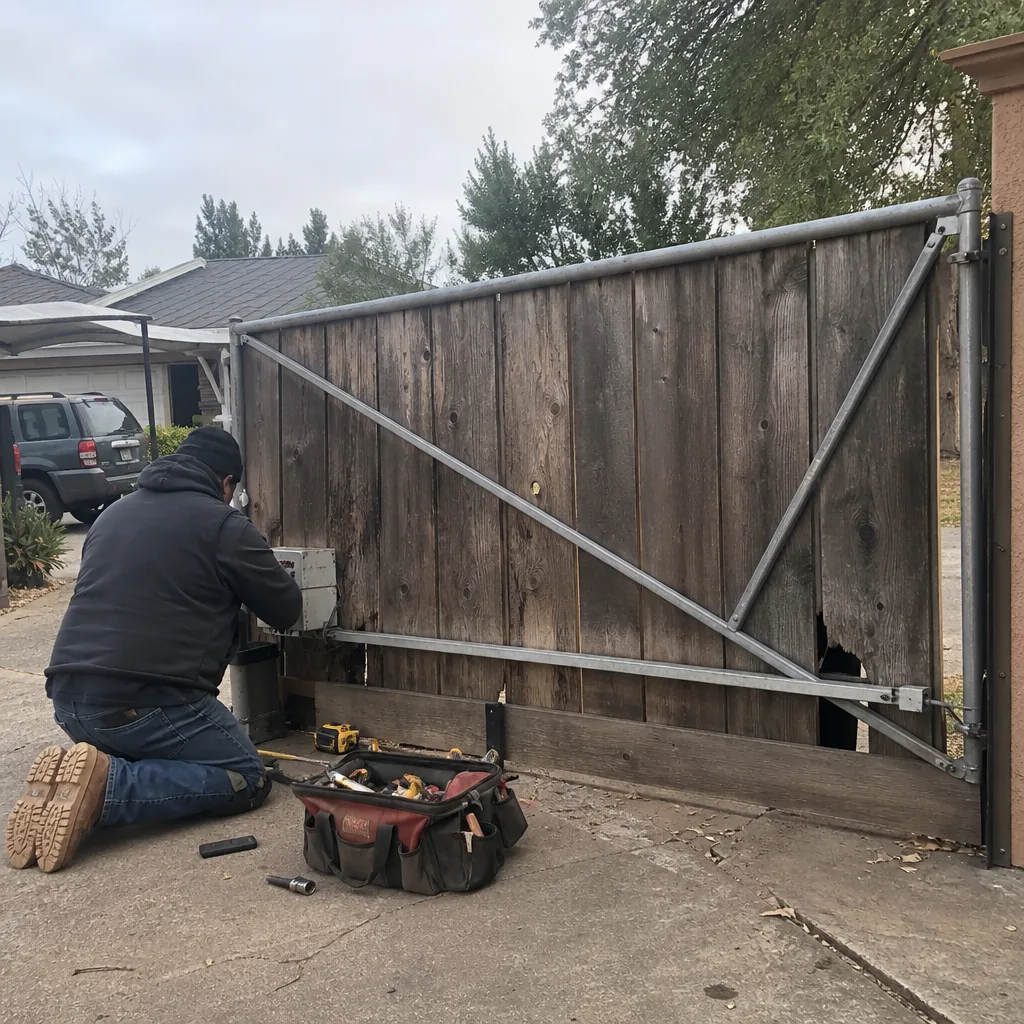 Before
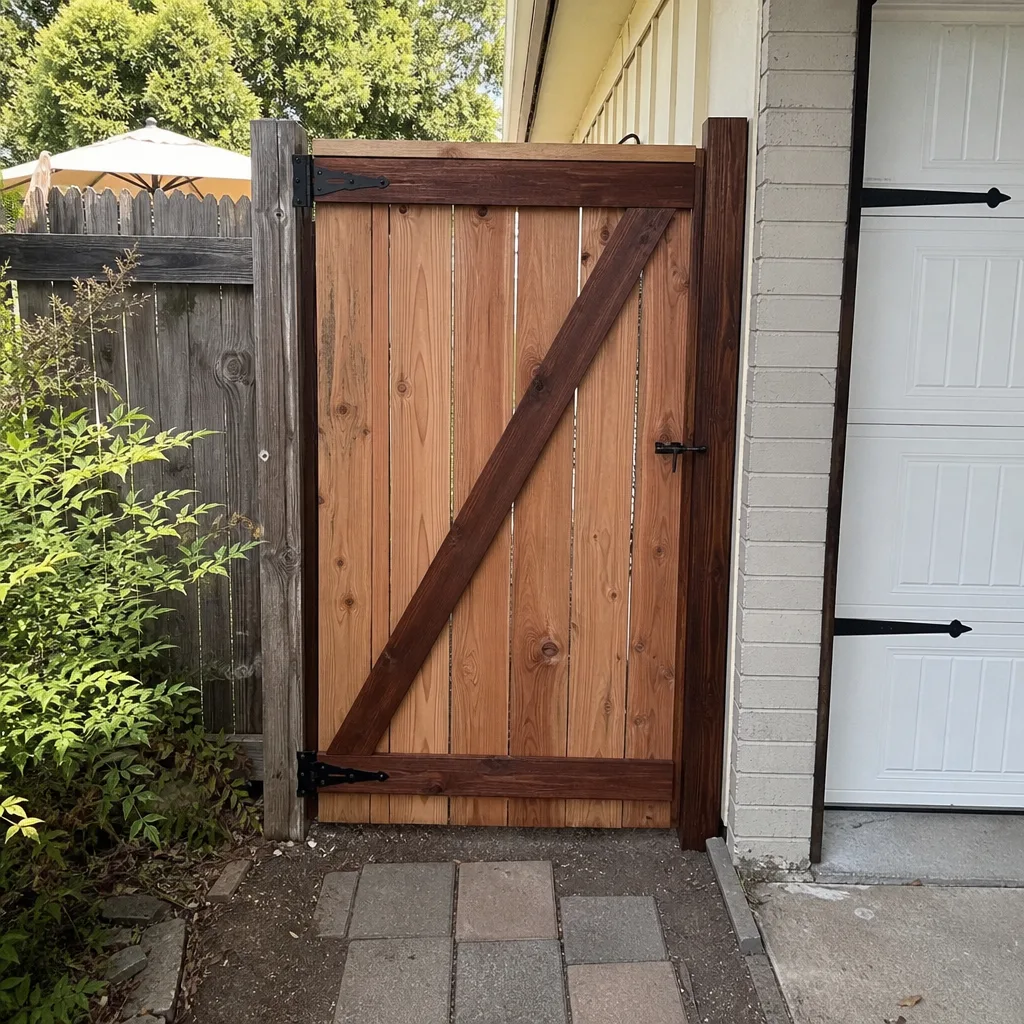 After
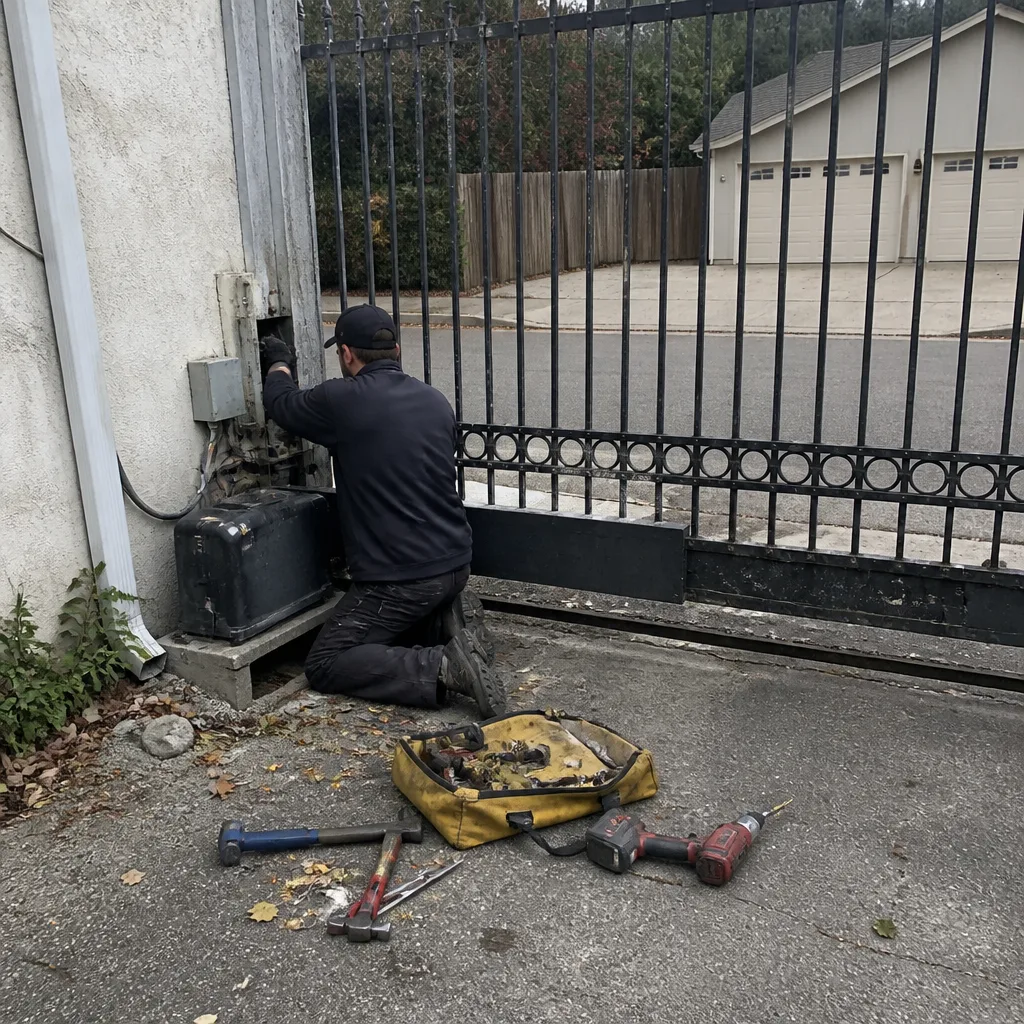 Before
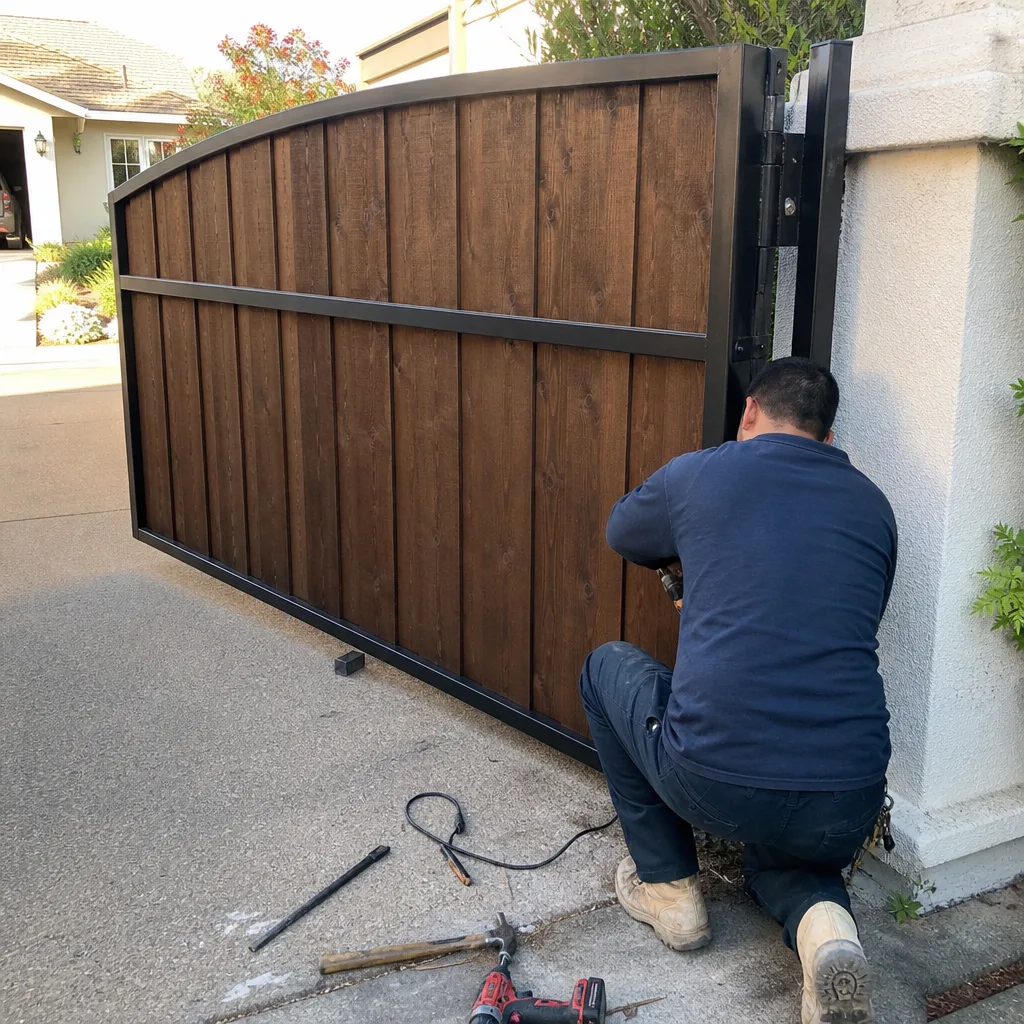 After
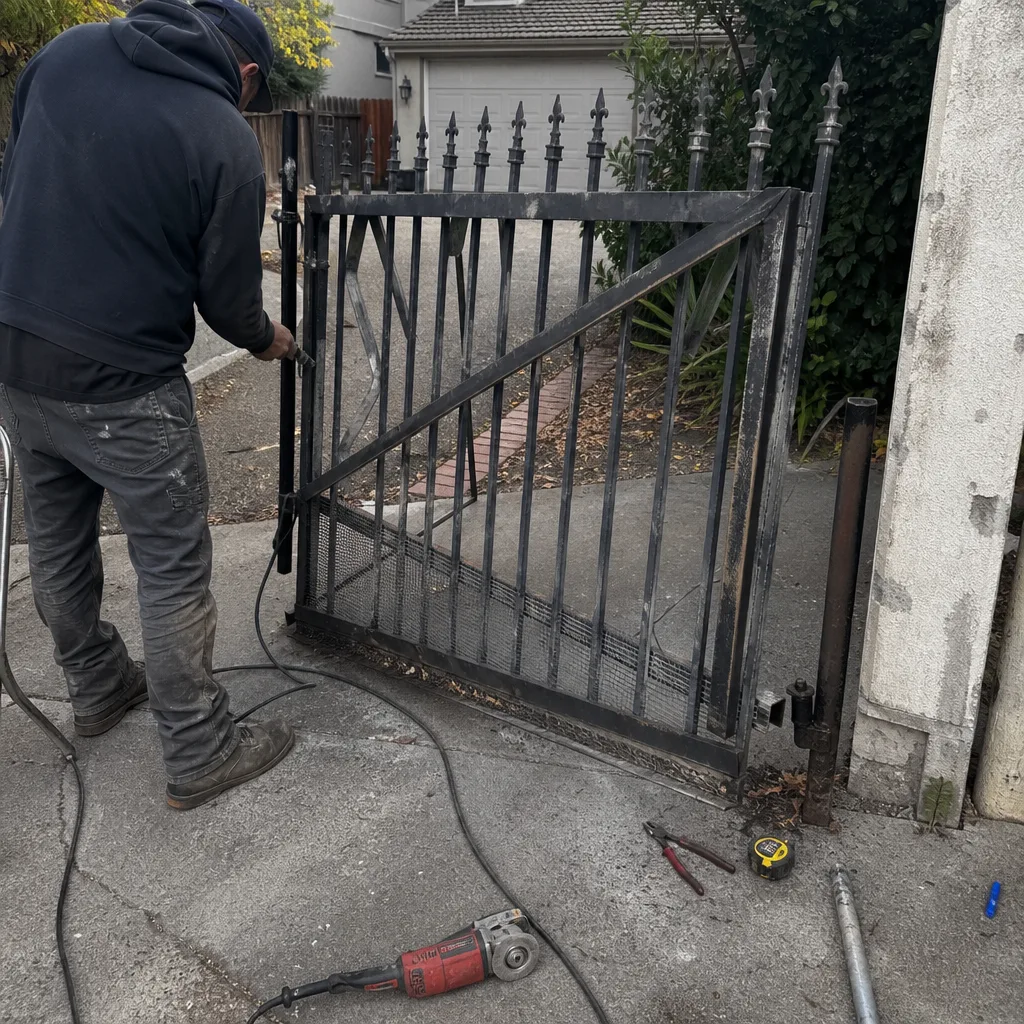 Before
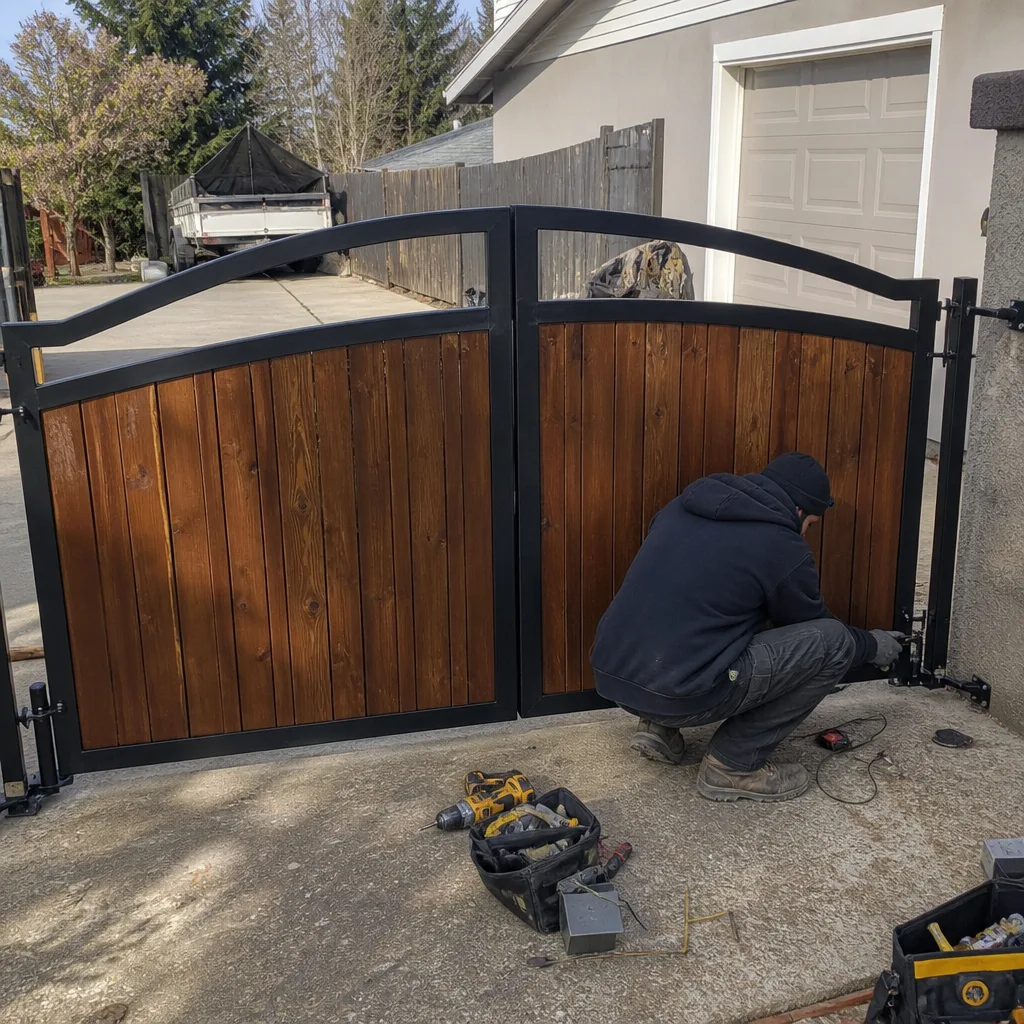 After
Frequently Asked Questions
Emergency gate repair in Citrus Heights typically ranges from $175 to $400 for the service call and diagnosis, with the final cost depending on the parts needed. A simple release and reset might be under $200, while an operator control board replacement can run $350 to $600. The good news is that most gate failures we see in Citrus Heights are mechanical releases or battery issues, not full operator replacements. We quote the full price before any work begins, and estimates are free.
In most cases, yes. Gate Repair Citrus Heights prioritizes emergency calls for the area, and we aim to dispatch a technician same-day for failed-open or failed-closed gates. If the gate is failed open and the property is unsecured, that’s an urgent scenario. If it’s failed closed, we still treat it as time-sensitive because you can’t get your vehicle out. Call (877) 752-5078 and we’ll tell you the next available window.
A full gate installation includes the gate frame or panel, hinges and posts, the operator if you want automation, a control board and remote receivers, safety devices like photo eyes and edge sensors, and a manual release mechanism. At Gate Repair Citrus Heights, we quote gate installation in Citrus Heights as a complete project, including the manual override, battery backup options, and programming for your remotes. We recommend specifying the manual override at installation time because adding it later costs more.
Yes. Electric gate installation requires a dedicated electrical circuit run to the operator location, and we coordinate that with a licensed electrician when necessary. The operator itself, the control board, and the accessory wiring are covered as part of the gate installation.
Gate operators in Citrus Heights typically last 7 to 12 years, but that spread is mostly a function of maintenance. Operators that get annual service, clean limit adjustments, and battery replacement every 2 to 3 years hit the high end of that range. Operators that get ignored until they fail hit the low end. The heat is the main factor. Electronics degrade faster in sustained high temperatures, and Citrus Heights summers are relentless.
The most common cause is a blocked safety sensor. The photo eye at ground level thinks something is in the gate path, so it refuses to close. Check for dirt, spider webs, or debris on the sensor lens. The second most common cause is a limit switch that’s out of adjustment, which will require a technician with a service remote. If neither of those resolves it, there’s likely an electrical issue with the operator. Call (877) 752-5078 for a free estimate on the diagnosis.
The Bottom Line
A gate that fails doesn’t care about your schedule, your neighborhood, or the hour of the day. What it cares about is whether you have a plan. The Citrus Heights homeowners who handle gate failures best are the ones who know their brand, know their manual release, have a manual key override installed, and have a phone number for a gate specialist saved before the failure happens. The ones who don’t spend hours fumbling through manuals and pay more for emergency service. This guide exists so you can be the former. Read it once, keep the checklist where you can find it, and next time your gate fails in Citrus Heights, you’ll know exactly what to do in the first 30 minutes.
Written by the team at Gate Repair Citrus Heights home, serving Citrus Heights since 2018.